Thursday, January 4, 2024

Understanding the Concept of Destination Branding through Trademark Protection

 The hospitality industry of India has undoubtedly become an exceedingly crucial service provider across the nation. Due to the increase in tourism, the role of restaurants and hotels has also increased. By establishing a brand name, a service provider in the hospitality industry can benefit from having many customers and build a good reputation. However, there is a risk involved in this scenario – with the brand names of hotels and restaurants becoming popular, other service providers in the industry might misuse this popularity to gain an unfair advantage. Therefore, to protect your business in the hospitality industry, you must seek protection via Intellectual Property Rights (IPRs), specifically by registering your hotel or restaurant brand name and logo as trademarks. Here in this article, we shall shed light on the relationship between Trademark Law and the hospitality sector in India.

Relationship between Trademark Law & the Hospitality Industry

A trademark refers to any mark capable of being represented graphically, identifying the products or services of one and distinguishing them from those of others in the market. Hotels and restaurants must get their brand names and logos registered as trademarks for the ease of operating a business in India. Brands and businesses need to identify the Class under which their products or services fall. The same is done through the Nice Classification of Goods and Services, which, in 2010, added Class 43 for restaurants and hotels. Kindly note that a few services can’t be registered for in Class 43, including arranging travel by tourist agencies, rental services for real estate, preservation services for food and drinks, discotheque services, rest and convalescent homes, and boarding services.

If hotels and restaurants wish to have a more extensive and holistic Trademark Protection in place, they can register their proposed trademarks under other trademark Classes. Doing the same shall help them secure the varied services provided by them. Such trademark Classes include:

  • Class 3 – Dealing with cosmetics, essential oils, perfumes, etc.
  • Class 16 – Dealing with stationery material, such as office requisites, letterheads, printed matter, etc.
  • Class 25 – Dealing with headgear, footwear, and clothing.
  • Class 35 – Dealing with office functions, advertising, business administration, and business management.

Trademark for the Taj Mahal Palace Hotel

The Indian Hotels Company Limited filed a Trademark Application for the Taj Mahal Palace Hotel in Mumbai and obtained its registration. It was the first ever hotel to get a trademark registered for its building. The trademark is registered in Class 43 for the image and the Tower Wing Exterior of the Taj Mahal Palace Hotel. Internationally as well, similar trademarks have been filed and registered, such as the Sydney Opera House in Australia, Eiffel Tower in Paris, and Empire State Building in New York.

With the Trademark Registration of the Taj Mahal Palace Hotel’s building, the Indian Hotels Company can undoubtedly ensure protection from:

  • Entities that may use the image of the Taj Mahal Palace Hotel for commercial purposes without having adequate authorization
  • Entities that may sell products with the image of the Taj Mahal Palace Hotel, which leads to Trademark Infringement

Obtaining trademark protection for the Taj Mahal Palace Hotel is essentially stronger than copyright or industrial design protection since they deal with the commercial and aesthetic value of the property, respectively. Registering the architecture of a hotel as a trademark leads to a landmark, which acts as a source indicator and generates more revenue. Furthermore, in Rock and Roll Hall of Fame and Museum v. Gentile Production, it has been ruled out that for a building to obtain trademark registration, it must create a distinct commercial impression performing the trademark function of identifying the source to the customers.

Understanding the Concept of Destination Branding through Trademark Protection

The hospitality industry has grown immensely with destination branding, thereby finding its significance in tourism. Destination branding refers to the concept of promoting one specific location or place using a tagline or logo. The same is then safeguarded under trademark law.

It acts as an incentive for the consumers or for them to visit the place and enjoy the experience assured by the promoter. The concept as a whole came to the picture in different states and cities of India and worldwide to promote tourism.

For instance, the ‘Incredible India’ campaign was introduced in 2002 in India to promote and advertise the nation’s rich heritage and culture.  The corresponding logo and wordmark got registered as a trademark (to avoid any misuse or misappropriation) in 2007 under Class 39, which deals with packaging, storage of goods, transport, and travel arrangements.

Kindly note that destination branding fails if there is political instability in a region or incompetent implementation of measures for enhancing tourism.

Trademark Protection for Big Hotel Chains and Restaurants 

In India, big hotel chains and restaurants, like Shangri-La, JW Marriott, Radisson, Hyatt, Oberoi, etc., have realized the importance of safeguarding their products and services through Trademark Rights and registered them under various Classes. It may include boarding facilities, accommodation services, clothing items, shampoos, soaps, cosmetics, stationery items, advertising, etc.

Let us take the example of Radisson Hotels International Inc. It has registered several trademarks, including RADISSON BLU, RADISSON RED, RADISSON INDIVIDUALS, and RADISSON MEETINGS, under Class 43. For accommodation services, reservation services, and award programs for customers, the hotel has registered two trademarks, namely RADISSON and RADISSON GOLD AWARDS, under Class 16. Clothing items, such as jackets, shirts, hats, bathrobes, etc., produced under the name of Radisson, have also been trademarked under Class 25. The hotel’s cosmetics, soaps, and shampoos have been registered in Class 3.

Therefore, hotels and restaurants in India should aim for all-inclusive trademark protection. They must look forward to protecting their distinctiveness, brand name, and reputation from the usage of any fraudulent marks.

Wednesday, June 21, 2023

How is Copyright Protection Applicable to the Indian Music Industry?

 However, are you aware that before playing the famous songs publicly, you need to have all the permissions in place from the makers of such songs? If you fail to do so, you shall end up finding yourself in big trouble like Copyright Infringement. Here in this article, we shall be thoroughly discussing Copyright Protection in the Indian music industry. We shall answer a few questions, including:


  • How can you save yourself from receiving a copyright claim?
  • Are there provisions in the Indian Copyright Act allowing remixing an old song to a new song?

The term ‘copyright’ combines two words, copy and right; therefore, we can also say that copyright refers to the legitimate and exclusive rights of the individual or entity owning the creative Intellectual Property (IP) assets.

Ian Richard Hargreaves CBE, Emeritus Professor at Cardiff University, Wales, the United Kingdom, has stated that the copyright system can’t be considered appropriate for the present digital age as millions of individuals infringe upon the creative works of others on an everyday basis by simply switching video or audio files from one device to another.

Copyright protection in the music industry gives the producers exclusive legal ownership of creative musical works and recordings. It also includes the exclusive right to distribute, reproduce, and license the copyrighted work to obtain royalties. Kindly note that when lyrics and music are recorded, written on paper, or otherwise placed in a document, the copyright in the creative work is automatically created. The United States Copyright Office has mentioned that once a sound is captured, implying that it must be recorded on a medium that could be sensed, copied, or otherwise transmitted, the master recording is copyright protected in digital tracks, tapes, optical disks, or any other format. However, it is highly advisable to go ahead with copyright registration of your song or musical work. To do the same, you need to ensure that it is tangible, fill out the required copyright application form at the copyright office, and pay the prescribed fee.

Musical Works under the Indian Copyright Act of 1957

Under Section 2(P) of the Indian Copyright Act of 1957 (referred to as Act further in this article), a musical work is defined and is said to include works composed of music containing graphic symbols. An original song is formalized, decorated, modified, and transferred to the original work’s category. You can use sounds to create new musical works by mixing, adding, and deleting some specific aspects of the original song. In India, Bollywood movie songs are loved by everyone. We have listened to the legendary 90s Dheere Dheere Se Meri Zindagi Mein Aana, featuring Rahul Roy and Anu Agarwal, and its remake by Yo Yo Honey Singh. The question that now arises is whether it is legitimate to exploit an artist’s original creative work in this way? In this scenario, the new music or remix is created using audio mixing and adding and subtracting some aspects of the original song.

As per Section 52(1)(j) of the Act, certain uses and modifications of creative works, including sound recordings and music, require obtaining the owner’s consent. It talks about obtaining a legal license to use a copyrighted work in a specific way, provided that the individual or entity (i.e., the licensee) pays the required fee and complies well with the law.

In the case of Gramophone Co v. Super Cassettes, the court held that obtaining the permission of the original owner to use a piece of his creative musical work is necessary. However, in Gramophone Co v. Mars, the court had the opposite opinion. It held that as long as the requirements of Section 52(1)(j) are followed, there might be no instance of copyright infringement and no necessity to obtain the owner’s consent (consent requirement is only for the first recording).

The whole world of music copyright law is undoubtedly complicated; however, it is not that tough to safeguard a piece of musical work and obtain royalties for it. You only need to register your copyright, join the necessary debt collection agency, and pick a distributor. Don’t forget that registering your copyright shall protect your creative work and prevent theft, misuse, and infringement.

Monday, June 19, 2023

What is an Assignment and Licensing of Copyright?


What is an Assignment of Copyright?


An assignment is, in spirit, a transfer of ownership, even if it is partial. The copyright owner in an existing work or the future owner of the copyright in a further work may assign to any person the copyright either wholly or partially, either generally or subject to limitation, either for the whole of copyright or any part thereof. In case the assignment of copyright is for any future work, the assignment will take effect only when the work is in an expressed form and not just an idea.

No one has the right to copy, reproduce, sell, or publish an original work without the permission of the creator. It means that only the owner of the copyright can transfer the ownership of the copyright to a third party. Another important thing to note is that with the assignment of a copyright, the assignee shall also enjoy all the rights related to the copyright of the assigned work.

Copyright is a bundle of rights and can be exploited in several ways independently from each other. Each work has various rights, such as theatrical rights, distribution rights, rental rights, broadcasting rights, rights related to adoption and translation, rights to prepare derivative works, and so on, each of which can be exploited separately. These rights can be disjointedly assigned for a limited term or perpetually.

An assignment has two objectives:

  1. Where an assignee is concerned, it confers on him the right of exploitation of work for a specified period in the specified territory; and;
  2. For the assignor, it confers on him the right to receive a royalty on the work assigned.

Mode of Assignment of Copyright

The owner of the copyright in the existing or future work may assign it to any person. It can be assigned either wholly or partially and with or without limitation on the whole or any part of the copyright. Assignment of copyright in any work shall not be valid unless it is in writing and signed by the assignor or by his authorized agent. Oral assignment of copyright is usually neither permissible nor valid. It shall identify the work and specify the rights assigned, the duration, the territorial extent of such assignment, and the amount of royalty payable to the author.

Difference between Assignment and Licensing of Copyright

Copyright license and assignment of copyright are two dissimilar terms that cannot be used interchangeably. Each of them is different in its own way. A license provides approval of an act, and without it, the authorization would amount to infringement. Licensing usually involves authorizing some of the rights out of many. It can either be exclusive or non-exclusive. In the case of assignment, it includes the disposal of the copyright, which in simple terms means the assignor assigns the copyright to another person or the transfer of ownership of the copyright to some other person, whereas in the case of a license, only some Intellectual Property (IP) is transferred and the ownership is not transferred to the licensee. A license does not confer any right to the licensee against a third party or licensor, but an exclusive licensee has substantial rights against the licensor and even a right to sue the licensor.

A licensee also has the right to make amendments provided that his license does not restrict that right. In case there is a failure in paying the royalties, the licensor can revoke the license. When it comes to the assignment, the same is not possible. However, if there is anything harsh that can affect the author, it may lead to revocation in the event of a complaint made to the copyright board.

A copyright license, unlike a copyright assignment, needs to be in writing. It can be oral or implied after considering all the facts and circumstances relating to the transaction between the owner of the copyright and the licensee. Thus, if an individual who is the owner of a copyrighted work thinks about assigning the copyright, he can consider licensing his copyright instead of assigning it. It would help in retaining ownership, thereby licensing only certain rights to another party.

Essential Features of a Copyright Assignment Agreement

  • The assignment must specify the amount of copyright. The creator shall not assign or waive the right to receive royalties to be shared on an equal basis with the assignee of copyright, subject to certain conditions.
  • The ownership may be assigned either wholly or partially.
  • The assignment should also specify the duration.
  • The territorial extent of such assignment should be specified.
  • The assignment shall be subject to revision, extension, or termination on terms mutually agreed upon by the parties.
  • The creator is entitled to subsequent royalties in the course of future exploitation of a work.
  • The assignee has the rights of translation, abridgment, adaptation, and dramatic and filmmaking in the work after obtaining the rights via assignment deed.

The main objective of the assignment process is to give financial and distribution benefits to the original work. Copyright assignment can prove to be a necessity in this world as it may lead to enhancing the potential of the original work by reaching several individuals as they may add their creativity to the original work. However, the practicality of copyright assignment has been controversial on several occasions due to the increasing number of Copyright Infringement cases.

Friday, June 16, 2023

India - Trademark Protection for the Hospitality Industry

The hospitality industry of India has undoubtedly become an exceedingly crucial service provider across the nation. Due to the increase in tourism, the role of restaurants and hotels has also increased. By establishing a brand name, a service provider in the hospitality industry can benefit from having many customers and build a good reputation. However, there is a risk involved in this scenario – with the brand names of hotels and restaurants becoming popular, other service providers in the industry might misuse this popularity to gain an unfair advantage. Therefore, to protect your business in the hospitality industry, you must seek protection via Intellectual Property Rights (IPRs), specifically by registering your hotel or restaurant brand name and logo as trademarks. Here in this article, we shall shed light on the relationship between Trademark Law and the hospitality sector in India.


Relationship between Trademark Law & the Hospitality Industry

A trademark refers to any mark capable of being represented graphically, identifying the products or services of one and distinguishing them from those of others in the market. Hotels and restaurants must get their brand names and logos registered as trademarks for the ease of operating a business in India. Brands and businesses need to identify the Class under which their products or services fall. The same is done through the Nice Classification of Goods and Services, which, in 2010, added Class 43 for restaurants and hotels. Kindly note that a few services can’t be registered for in Class 43, including arranging travel by tourist agencies, rental services for real estate, preservation services for food and drinks, discotheque services, rest and convalescent homes, and boarding services.

If hotels and restaurants wish to have a more extensive and holistic Trademark Protection in place, they can register their proposed trademarks under other trademark Classes. Doing the same shall help them secure the varied services provided by them. Such trademark Classes include:

  • Class 3 – Dealing with cosmetics, essential oils, perfumes, etc.
  • Class 16 – Dealing with stationery material, such as office requisites, letterheads, printed matter, etc.
  • Class 25 – Dealing with headgear, footwear, and clothing.
  • Class 35 – Dealing with office functions, advertising, business administration, and business management.

Trademark for the Taj Mahal Palace Hotel

The Indian Hotels Company Limited filed a Trademark Application for the Taj Mahal Palace Hotel in Mumbai and obtained its registration. It was the first ever hotel to get a trademark registered for its building. The trademark is registered in Class 43 for the image and the Tower Wing Exterior of the Taj Mahal Palace Hotel. Internationally as well, similar trademarks have been filed and registered, such as the Sydney Opera House in Australia, Eiffel Tower in Paris, and Empire State Building in New York.

With the Trademark Registration of the Taj Mahal Palace Hotel’s building, the Indian Hotels Company can undoubtedly ensure protection from:

  • Entities that may use the image of the Taj Mahal Palace Hotel for commercial purposes without having adequate authorization
  • Entities that may sell products with the image of the Taj Mahal Palace Hotel, which leads to Trademark Infringement

Obtaining trademark protection for the Taj Mahal Palace Hotel is essentially stronger than copyright or industrial design protection since they deal with the commercial and aesthetic value of the property, respectively. Registering the architecture of a hotel as a trademark leads to a landmark, which acts as a source indicator and generates more revenue. Furthermore, in Rock and Roll Hall of Fame and Museum v. Gentile Production, it has been ruled out that for a building to obtain trademark registration, it must create a distinct commercial impression performing the trademark function of identifying the source to the customers.

Understanding the Concept of Destination Branding through Trademark Protection

The hospitality industry has grown immensely with destination branding, thereby finding its significance in tourism. Destination branding refers to the concept of promoting one specific location or place using a tagline or logo. The same is then safeguarded under trademark law.

It acts as an incentive for the consumers or for them to visit the place and enjoy the experience assured by the promoter. The concept as a whole came to the picture in different states and cities of India and worldwide to promote tourism.

For instance, the ‘Incredible India’ campaign was introduced in 2002 in India to promote and advertise the nation’s rich heritage and culture.  The corresponding logo and wordmark got registered as a trademark (to avoid any misuse or misappropriation) in 2007 under Class 39, which deals with packaging, storage of goods, transport, and travel arrangements.

Kindly note that destination branding fails if there is political instability in a region or incompetent implementation of measures for enhancing tourism.

Trademark Protection for Big Hotel Chains and Restaurants 

In India, big hotel chains and restaurants, like Shangri-La, JW Marriott, Radisson, Hyatt, Oberoi, etc., have realized the importance of safeguarding their products and services through Trademark Rights and registered them under various Classes. It may include boarding facilities, accommodation services, clothing items, shampoos, soaps, cosmetics, stationery items, advertising, etc.

Let us take the example of Radisson Hotels International Inc. It has registered several trademarks, including RADISSON BLU, RADISSON RED, RADISSON INDIVIDUALS, and RADISSON MEETINGS, under Class 43. For accommodation services, reservation services, and award programs for customers, the hotel has registered two trademarks, namely RADISSON and RADISSON GOLD AWARDS, under Class 16. Clothing items, such as jackets, shirts, hats, bathrobes, etc., produced under the name of Radisson, have also been trademarked under Class 25. The hotel’s cosmetics, soaps, and shampoos have been registered in Class 3.

Therefore, hotels and restaurants in India should aim for all-inclusive trademark protection. They must look forward to protecting their distinctiveness, brand name, and reputation from the usage of any fraudulent marks.

Wednesday, November 16, 2022

How to Create the Perfect Logo for Trademark Registration?

 Hiring a professional logo designer can be a good idea if you have all the required resources. This article shall assist you in creating the perfect logo for Trademark Registration because although the task appears simple, it isn't as per the field experts. If you are committed to fulfilling this task on your own, we have got you covered.


So, go through the article to start your logo creation journey and succeed in expressing your company's visual recognition vividly.

Why Does the Logo for Trademark Registration Need to be Perfect?

Customers generally get attracted to brands and businesses having something unique to offer them based on value. It is because we have multiple options to choose from in the ongoing era. Therefore, our conscious mind wants to settle for the best possible solution. Consequently, it becomes essential for brand and business owners to give due importance to the logos of their brands or companies.

Creating the best possible logo shall ignite the interest of your already existing and potential customers and even initiate a stream of curiosity amongst them concerning the true essence of your brand or business. A logo casts an enormous impact and influence on entities and people coming to know about your venture for the first time. The overall design of a logo conveys a message concerning your offerings, which, in turn, assists the buyers in making the right buying decisions.

Understanding the Role of a Logo in Describing the Brand or Business

As you move further in your journey of logo creation, it is imperative to be crystal clear and focused as to how you would want to reveal the personality of your brand or business to its customer base. To achieve the same, you first need to figure out the core offerings of your brand or business. As a brand or business owner, your job becomes pretty easy when you grab the idea of what enables you to market your brand or business as a unique venture. After doing the same, multiple design ideas pop up in your mind that shall help connect all dots and complement the contribution of your brand or business to the community.

To achieve the bottom line concerning the personality of your brand or business, you must have the answers to the questions listed below:

  • Why did the idea of your brand or business take off in the first place?
  • What are the virtues of your brand or business company?
  • What sets you apart from your competitors in the industry?
  • If someone asks you to describe your brand or business using three words, what would they be and why?
  • What is your USP?
  • How would you want your customers to define your brand or business?

What Should a Logo Suggest?

If we start thinking about widely recognized logos, the first two-three examples coming across our minds would include the classic McDonald's logo with the 'M' initial written over a red background or the popular Apple Inc. logo depicting the apple fruit with a bite-sized portion missing from it. These are two classic examples; however, we can refer to a plethora of others.

A logo comprises a symbol or design representing the identity of your brand or business. People easily identify the brand or business offerings after some time of conceptualizing the logo. In straightforward terms, a logo becomes the face of any business or brand over time. It helps a business company or brand to stand apart from its competitors in the market and provides the target audience with a fresh vibe. It won't be wrong to admit that a brand or business owner gets a terrific opportunity to make a statement for his brand or business company by creating a visually appealing and compelling logo.

Let us take into account another example of the e-commerce giant Amazon. It has a smiley sign below the word Amazon, which signifies that customers are bound to get everything on the online platform that too effortlessly, which shall eventually lead to a satisfied and happy customer base. Therefore, we can say that the smiley sign is justified. All in all, a logo undoubtedly plays a significant role in conveying the message of a brand or business.

Important Aspects to Keep in Mind While Creating a Logo

The first step involves brainstorming all possible options. Concepts and ideas thoughtfully coming across our minds should be recorded well on paper or digital devices - no matter how bad they are, since we always have the option of removing them at some later stage. Remember not to neglect any idea or concept seeming ridiculous in the first place, as some of them may hold the potential to strike an engaging debate, consequently leading to brilliant results.

After following the step mentioned above, the next one involves taking into consideration the psychology of your target audience. To begin with the same, you must jot down the words you would want your potential customers to use in the future to refer to your brand or business. To perform this step accurately, you require stepping into the shoes of your potential customers.

The last step involves the active and dedicated participation of all the team members. Sincere efforts must be put in to accomplish an outcome. Employees from different departments, including marketing, HR, accounting, sales, etc., can participate well in communicating their ideas. Don't forget that more perspectives combined together offer the best possible results.

Incorporating the Logo Design

The finalized logo must form the basis of all the marketing campaigns, specifically for usage on all the branding elements associated with your brand or business, including business cards, packaging items, official website designs, themes, etc.

You must, at this stage, decide upon your logo's color palette, font, final outlook, etc. To achieve the same, you may also consider hiring a professional designer. Once such things are done, your brand or business shall have a fresh look to offer the entire world.


Thursday, October 27, 2022

Can a Provisional Patent be Licensed in India?

 Patent Rights are exclusive rights granted by the concerned government authority or Patent Office to the inventor of a novel and original innovation, essentially providing a technical solution to an existing problem. Other than the inventor owning the exclusive patent rights, any other individual or entity is forbidden from manufacturing, distributing, selling, importing, or monetizing the patented invention.


However, with due authorization sanctioned by the rightful patent owner, a third party is allowed to manufacture, distribute, sell, import, or monetize a patented invention - and this process is called Patent Licensing. In simple terms, it refers to permitting some third party to extract benefits from a patented innovation by its proprietor. The third party involved, in return, has to pay a stipulated amount, as agreed upon by both parties, also called the royalty fee, to the patent proprietor. Consequently, the third party obtains the license to manufacture, distribute, sell, import, or monetize the patented invention in exchange for a royalty fee.

As mandated by the Patents Act of 1970, the terms and conditions of a patent license are to be duly written and signed over an agreement or contract. The owner of the patented invention is the licensor, and the third party to whom it gets licensed is the licensee. The patent license agreement usually mentions the duration the licensee can enjoy the patented invention.

Licensing a Provisional Patent

Although a patent owner would be willing to use and commercialize his patented invention for personal benefits, it is common to license it out to another individual or entity in exchange for a royalty fee. Patent licensing is carried out legally through a licensing agreement or contract with specific terms and conditions based on the consensus of the parties involved. Although patent licensing agreements are drafted after the invention has been patented, the question of whether or not a provisional patent can be licensed is pretty striking. The simple answer to the said question is a yes. Licensing out a provisional patent is possible. However, whether licensing out a provisional patent can be profitable to the parties involved might vary from one case to another.

There are no stringent timelines in India that can be adhered to when we talk about patenting an invention; it might take around 03 years or so. Or if the inventor decides to file through the expedited route, it might take at least 1.5 to 02 years to get an invention patented.

In many circumstances, the back-to-back office actions and the delay in filing responses by the inventors lead to severe backlogs. Therefore, it makes sense for the patent applicant or inventor to try every possible way of commercializing the invention while it is still with the concerned authorities or patent office awaiting its fate.


After filing the provisional patent application, the applicant or inventor attaches the tag of 'Patent Pending' to the product and starts commercializing it. Doing the same helps notify other competitors that the product can't be infringed upon and that it shall soon be patented.

Provisional Patent Application for Products

Why should licensing products not be possible if marketing the products after filing the provisional patent application is possible? The onus in this scenario is on the patent applicant or the prospective owner to convince the licensee that Patent Protection over the product shall be obtained soon and that the product is worth the royalty even before the patent gets granted.

It is imperative to note that the chances of licensing a provisional patent are pretty high when the patent applicant has a prototype, if not the real product. Furthermore, the fact that a provisional specification in itself doesn't constitute a patent must be remembered.

There might be a situation where the patent might get rejected, and it should be taken into consideration while drafting the patent licensing agreement based on the provisional patent application. In such circumstances, the obligation of the licensee to pay the royalty ceases.

Another way the patent applicants can license a provisional patent application successfully, without being affected by the drawback mentioned above, is by giving the licensee access to the technical know-how and trade secret of the invention while stating that a patent would only be an added advantage to the other two, i.e., the technical know-how and trade secret.

The patent licensing opportunities of a provisional patent undoubtedly depend on the value of the invention in question. Moreover, an invention can be licensed as a trade secret before filing a provisional patent application.

While a provisional patent application can be licensed, one has to keep in mind that it is not a patent per se. Therefore, the patent applicant has to draft the provisional application in harmony with the patent claims that shall eventually be drafted in the full patent specification.

Tuesday, October 18, 2022

Tips & Tactics to Ensure the Success of Your Patent Application Process

 The process of obtaining Patent Protection by filing a Patent Application may involve multiple obstacles, many of which may lead to the application being rejected. These may be because of a lack of research to support the patentability requirements or from the poor communication abilities of the patent applicant, leading to confusing arguments for the innovation's validity. Irrespective of different circumstances, let us discuss a few tips and tactics to ensure the complete success of your patent application procedure.


1.Ensure the Patentability of Your Innovation

You must verify beforehand whether your innovation or invention qualifies for obtaining patent protection. In the scenario where some other inventor or innovator has already invented or innovated the same thing, you would lose your individuality at the beginning. It would undoubtedly be a sheer waste of time, money, and effort to go through the entire patent application process. There are many resources available online for performing a Patent Search. Many law firms specializing in Patent Law can also help you verify your patentability criteria in a better manner.

2.Set Up Your Budget

The patent application filing process is a pretty expensive affair. It is always better to set up your budget well in advance to avoid any discontinuation in the middle of the patent application process. The high costs are because of the government processing and legal assistance charges. For instance, the patent professionals and attorneys would charge you to determine the patentability of your invention or innovation and for drafting the patent application. Furthermore, there are filing fees and examination fees for patent applications. Therefore, it is highly recommended that you set up a budget on time for your overall process.

3.Create a Timeline

Obtaining patent protection after filing the patent application is a time taking task. As per the patent experts in the industry, you may require waiting 02 to 03 years to get your hands on a fully working patented invention or innovation. The patent experts, therefore, suggest creating or establishing a patent timeline at the beginning to meet the due dates for every phase in the process.

Moreover, the earlier you start, the better it will be, as procrastination may lead to a comparable invention or innovation being launched by another inventor and safeguarded by a patent before you would be able to execute it in the market.

4.Document Every Single Detail Minutely

You must work as hard and sincerely as you can on the patent draft to ensure that you don't overlook even a minute detail in your patent later on. Always have your invention's written, audio, and visual documentation in place. Time-stamped files in soft and hard copies will be the icing on the cake. Such aspects shall help build your authority in the patent application process. The records shall help establish the chronological history of your innovation in the event that another innovator demonstrates a similar innovation at the same time as you do.

5.File a Provisional Patent Application before the Actual Patent Application

If you are unable to fulfill the requirements of time, money, and effort for getting your invention patented in its first version, you may consider filing a provisional patent application. Filing a provisional patent application is a time-saving and cost-effective solution to safeguard your innovation from theft or violation. It gives you 01 year to collect all the necessary and essential resources to file the actual patent application.

Any invention protected by filing a provisional patent application is given the tag of "pending for a patent." It implies that even though your invention isn't fully patented yet, the patent law still protects your ownership of it.

6.Create a Prototype

The government authorities or Patent Office will require a detailed explanation of the invention you wish to protect when you submit a patent application. The patent officer in charge will also question you to evaluate your confidence in your invention's development. Creating a working prototype for your invention is one of the best ways to demonstrate it properly.

The prototype refers to the model of the original invention and should be capable of imitating it. Consequently, a working prototype shall convince the concerned authorities that the concept is unique in its industry. It is also imperative to attach a written explanation of every element of the invention and how it works with the prototype.

7.Seek Assistance from Professionals

Sometimes a patent application gets rejected just because the filer or inventor couldn't explain the purpose of his invention effectively. In this scenario, seeking assistance from patent professionals can save you. The most critical aspect of a successful patent application is choosing the right Patent Attorney who is well acquainted with your invention, its underlying technology, its business point of view, and your short-term and long-term goals. Hiring a Patent Lawyer with the required training and expertise shall lay the groundwork for effective communication to explain your invention appropriately.

Wednesday, September 21, 2022

Debunking Top Eight Copyright Myths

 There have always been many inquiries concerning the number of common misunderstandings and misconceptions about Copyright Law. This article attempts to debunk the top eight copyright myths.


#Myth1 - Copyright Can Safeguard Your Ideas

Copyright Protection applies to recorded works; it doesn't apply to something intangible such as an idea. Within some specific areas (like inventions), it may be possible to file a Patent Application. Since copyright protection applies to recorded works, such as artwork, music, documents, etc., if a competitor uses your copyrighted work (by copying, adapting, or stealing your creative work to promote their product or service), it would fall under Copyright Infringement. In such a scenario, you can undoubtedly take action against the infringer; however, it is essential to note that there is nothing much you can do to prevent an individual or entity from creating their work based on a similar idea as long as they are not copying or stealing your work to do so.

#Myth2 - Everything on the Internet Lies in the Public Domain and is Free to Use

It highlights the most common misconception about the term 'public domain' when used concerning copyrighted works. Creative works become a part of the public domain only after their copyright expires, which is generally many years after the owner's or author's death. Kindly note that creative works posted on the Internet may be publicly accessible, but they are certainly not in the public domain.

#Myth3 - Any Work Without a Copyright Notice isn't Safeguarded

Copyright protection shall apply whether or not there is a copyright notice attached. In the United States, a copyright notice was needed to retain copyright protection on creative works published before 1st January 1978; however, it was the exception and not a standard and is certainly no longer the case. Besides, when the United States became a signatory to the Berne Convention for the Protection of Literary and Artistic Works, the copyright law in the nation was amended, and the use of a copyright notice on creative works published from 1st March 1989 became optional.

#Myth4 - You Can Copy 10% of a Creative Work Without Causing Copyright Infringement

Such is not the case. Any unauthorized use of copyrighted work can potentially lead to legal action from its owner or holder unless it is explicitly permitted under fair use or fair dealing rules.

When we talk about using extracts or quotes, there exists no percentage or magic figure that could be applied since every case must be viewed on its merit. What is clear from the cases that have come to trial is that it is the perceived importance of the copied content instead of simply the quantity that counts. What we advise is to always seek permission from the copyright holders before using their creative works.

#Myth5 - If You Change Someone Else's Work, You Can Claim it as Your Own

Adapting or copying some individual's or entity's work is a restricted act. In legal terms, any adaptation is regarded as a derived work. Therefore, if you adapt the creative work of others, it shall still very much be their work, and they will own the right to object you from publishing such a work when they haven't given you any permission to do so. Additionally, they are entitled to reclaim any money you make from selling their creative works.

The safest option in this aspect is to create something not copied or adapted from the creative work of others or seek permission from the copyright holder (for which you should expect to pay a fee or royalties). The creative works of others can undoubtedly inspire you; however, when it comes to your creative works, have a fresh start and don't copy what others have already done.

#Myth6 - You Can Copyright a Title or Name

Copyright laws are indeed very restrictive; they don't apply to titles and names that may be legitimately used in unrelated instances or duplicated coincidentally. There exists no reason from a copyright perspective why two creative works can't have the same title. No infringement occurs as long as the content of the creative works isn't adapted or copied. However, it doesn't imply that there isn't any protection on the name since it may be covered by other laws. If the name holds Trademark Protection or it could be proved that the title's use confuses or misleads the general public (known as passing off), there can be issues. While copyright protection holds from the point a creative work comes into being, passing off is based on the general public perception of what the name means (i.e., one gets a clear idea of what to expect to be given if he asks for Coca-Cola).

#Myth7 - It's Difficult to Prove Copyright Infringement

Such isn't the case since copyright law is principally civil and not criminal. Civil law needs a lower burden of proof, thereby making it easier to prove copyright infringement. In a civil case, a plaintiff requires convincing the tribunal or court that his claim is valid and that it is likely that the defendant is guilty on the balance of probability. On the other hand, a defendant in a criminal case is innocent until, beyond any reasonable doubt, proven guilty.

#Myth8 - Confusion over Copyright Protection in the Music Industry

A sound recording has separate copyright protection from the underlying musical composition. It implies that a new sound recording of an old piece of music shall still very much be copyright protected even if the copyright protection in the original musical recording has expired.

Wednesday, August 31, 2022

Vroom in the Automobile Industry Fueled by Intellectual Property Rights

 The transportation industry majorly contributes to employment numbers and the GDP of a nation. In the EU, it accounts for 5% of their GDP, and in the USA, it accounts for 7.7% of their GDP. Since the transportation industry plays a dominant role in a nation's growth and development, businesses must safeguard their interest in this industry. In this article, we shall discuss the various alternatives that businesses should consider while seeking protection under various forms of Intellectual Property Rights (IPRs).


Trademarks

In simple terms, a trademark refers to a word, symbol, letter, sign, or a combination of words or designs that enable the identification and differentiation of products or services of one from those of others. The rights under trademarks are afforded by domestic Trademark Laws, federal laws (where applicable), and common laws. The registration of such marks affords the proprietor of such rights to exclusively use the mark for the defined products or services in the particular place where the registration has been sought.


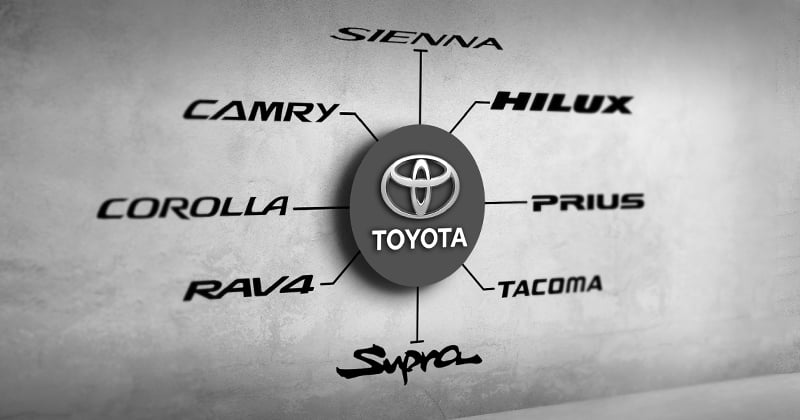
Particularly in the transportation sector, a trademark may be utilized to reserve rights over several products or services belonging to a single entity. The same shall deem useful to protect the parent brand and the subsidiaries. Consider the example of the famous automobile giant originating from Japan, namely, Toyota, where Toyota is the prime brand and the other subsidiaries like Lexus, Ranz, and Daihatsu are safeguarded by trademarks.


Copyright

Copyright is vested in original works of authorship fixed in a tangible medium of expression. Like, any IPR, Copyright Protection can be availed under domestic copyright legislation or common law. However, only registered copyright can avail of the remedies enlisted in the respective legislation.


In the transportation industry, several crucial elements may be safeguarded via copyright. The same includes website content and display, software source code, and instruction manuals.


Patents

A patent may be obtained by inventors of new and useful inventions that are non-obvious to the person skilled in the art. Such rights give the inventor the exclusive right to use the invention while excluding others from making, using, selling, offering to sell, or importing into the jurisdiction where such protection has been obtained over the patented subject matter for a limited time.


Patents are significant and pivotal in the transportation industry since they provide an edge in the market and an advantage for first-move makers. Developing a patent landscape in such an industry can also aid the R&D process to converge strategic efforts in an invention's development.


Industrial Designs

An industrial design is a property right that is available to someone who has invented any new, original, and ornamental design for a product. It safeguards the aesthetics of a product and not its utilitarian features. Furthermore, Industrial Design Registration provides the proprietor with the exclusive right to the three-dimensional (3D) shapes and configurations and two-dimensional (2D) features of a product or service. Therefore, it may be utilized to protect either the entire product or a segment of it.


In the transportation sector, it can be used to complement Patent Rights over an invention by safeguarding the look and feel of the automobile or a part of the automobile.


Trade Secrets

Trade secrets include the ideas, know-how, and other significant information valuable to the business, like the names of trusted contractors or suppliers or information on the internal operation of a business that sets apart one entity from others. Such information should not be publicly available or known to others.


In the transportation sector, such confidential information is safeguarded by the mode of entering into legally binding agreements of non-disclosure. Where two entities are involved in a collaborative effort, it may also be beneficial to cross-license or exchange trade secrets under mutual circumstances.


Uber's Resolve to Protect Intellectual Assets

Uber has been utilizing IPRs since 1996 as a strategic tool to maintain an edge in the market while also building a niche. It has safeguarded several visual manifestations of its brand in the form of logos and icons. In 2016, it changed its logo to depict flexibility and brand fluidity. It also utilized the protection under utility Patent Law to safeguard its business methods.

Initially, patents registered in favor of Uber dealt with the dynamic adjusting of prices for availing its services, diagnosing a location related to on-demand services via the use of portable computing devices, and providing information related to the position of goods in transit to a computing device.


Later on, Uber's patents were observed to be filed on aspects based on splitting the fare for an on-demand service, optimizing the selection of drivers for requests of transportation, providing notifications to devices based on real-time conditions related to an on-demand service, and assistance related to trip planning and implementation.


However, tracing the recent developments, Uber's patents are more focused on autonomous vehicles with features like advancing remote assistance to an autonomous vehicle, an autonomous vehicle operated with guide assistance of human-driven vehicles, an autonomous vehicle with independent auxiliary control units, an intelligent lens masking system, etc.


Conclusion

As seen from the discussion hereinabove, innovation in the transportation industry is ever-evolving and focuses on developing a more efficient, safe, and consumer-friendly approach. Therefore, industries, companies, and start-ups need to be aware of the significance of safeguarding their innovative products and processes while also building on their brand value and image by securing IPRs to boost the commercial value of their inputs in the automobile industry.

Wednesday, August 17, 2022

Patent Thickets: An Intertwining Web of Inventions


What are Patent Thickets?

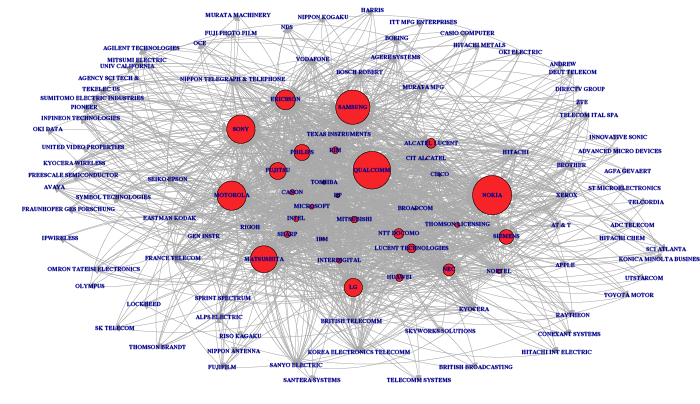
In the words of Carl Shapiro, an American economist, a patent thicket is "a dense web of overlapping Intellectual Property Rights that a company must hack its way through to commercialize new technology." Some industries face the issue of patent thicketing more than others since few are regulated by fewer or single patents. For instance, the pharmaceutical industry usually has a product coming from a single patent that protects a molecule. However, in some other industries like the telecommunication industry, there are intertwined technologies protected by several patents. Consider a cell phone covered by at least 2,50,000 patents, including LCD, antennas, processors, batteries, etc. In such complex environments, it is necessary to gather access to all surrounding technologies to enable the protection of that individual cell phone.

Origin of the Defensive Strategy

Earlier in 1856, a group of entities jointly acquired a dominant position by patenting sewing machines, forming the first patent pool in the world that continued until 1877. Then, a company named Draper acquired an authoritative patent position for loom temples and consequently began a long-term practice of employing aggressive use of patent thickets. Since then, entities have formed multiple patent thickets in the last 150 years.

One of the earliest sectors to have adopted this strategy of 'mutual non-aggression' came to be witnessed in the semiconductor and computer industries leading to software companies obtaining several 'defensive' patents.

Even though the origins can be traced to 1856, it was in the 1970s that the term 'patent thicket' came to be used in common parlance when Xerox dominated the photocopier industry. These defensive thickets substantially decreased Research and Development (R&D) incentives for many upcoming inventors; however, they came as an advantage to those who became a part of it, reduced the transaction costs, and created a vertical monopoly.


Do Patent Thickets Prevent Innovation?

  • Patent thickets significantly disrupt innovation since the smallest components are owned by individual proprietors or independent companies that make the process of obtaining patents an uphill battle.
  • They increase the scope and number of patent litigations.
  • They complicate the process of negotiating licensing agreements due to an increase in the number of parties to a single transaction.
  • They weaken the inventive drive since they also encourage patent-ification of all small and, therefore, innumerable inventions and products.
  • They increase the cost of a patent transaction since newer patent holders are encouraged to seek prior approvals of proprietors of all small components incorporated in the invention.
  • They reduce the scalability of profits.
  • They potentially decrease the incentive to innovate.
  • The cost of the end product is ultimately heightened with patent thickets.


Thickets: A Burden on Common Man

Five of the top ten selling drugs in the United States of America include Humira, Enbrel, Keytruda, Revlimid, and Imbruvica. A total of 584 Patent Applications have been obtained after their initial Food and Drug Administration (FDA) approval. For example, on Humira itself, there are additional patents on the autoinjector device and a separate patent for the 'firing button' on the device. It is a typical case of patent thicketing.

The cost of these transactions is ultimately borne by the common man. Therefore, they heavily obstruct medical aid at reasonable prices. It also means they are a welcoming step for anti-competitive practices hindering the ability to negotiate.


Furthermore, it also promotes the evergreening of certain patents and creates a monopoly in the hands of a few. Again, let us take the example of Humira. The patent covering Humira had expired way back in 2016; however, the other 132 drugs thicketing the drug expire not before 2034. It implies the entry of biosimilars and generics as well. Yet, in the case of Mayor and City Council of Baltimore v. AbbVie Inc, 7th U.S. Circuit Court of Appeals, No. 20-2402, it was held that AbbVie did not block competition by erecting a thicketed fence.


Conclusion: Resolving the Issue and Untangling the Web

The following solutions and approaches can be adopted to prevent patent thicketing:

  1. Patent Pools: A patent pool requires "an agreement between two or more patent owners to pool their patents and license amongst themselves or to a third party on pre-determined licensing terms." This strategic outlook was also first adopted amongst the sewing machine entities resulting in the creation of a 'Sewing Machine Combination.' Since a patent pool may enable innovation in the early stages of a new invention being developed and harnessed, in the later times, it may lead to a serious threat of the creation of cartels that operate on supremacy and monopolization by regulating the market process, controlling demand and supply, etc. To prevent this, the USA has implemented a broad parameter, i.e., in the USA, the entire patent pool system has been brought under one parameter - blocking (essential) or complementary patents belong to a pool, while substitute or competing patents are to remain separate.


  1. Proactive Role of Courts: Courts should take proactive measures and stringent steps to accord protection to the IPRs of individual inventors. Therefore, the specialized knowledge of experts should be used to understand and adjudicate patent-related matters.


  1. Tougher Scrutiny to Grant Patents: The Patent System was introduced and implemented to inspire innovation and creativity, thereby enabling the growth of the economy while granting a monopoly for a limited time in return. However, the ordeal of granting patents way too easily for trivial innovations and unsubstantial products or processes has made the patent system discourage breakthrough innovations and ideas. The examiners and registrars should pay great attention to the state of the art and the knowledge of a person skilled in the art before deducing whether or not a patent shall be granted.


  1. Cross Licensing: Cross licensing agreements that license present portfolios and future inventions reduce transaction costs. To quote a few examples, Intel entered into many broad cross-licenses with other companies such as IBM, agreements between Microsoft and JVC, which came into being in 2008, and the agreement between Hewlett-Packard and Xerox to amicably settle their outstanding patent disputes.


Monday, July 11, 2022

Contemplating the Theories of Confusion in Trademarks: Confuse No More!


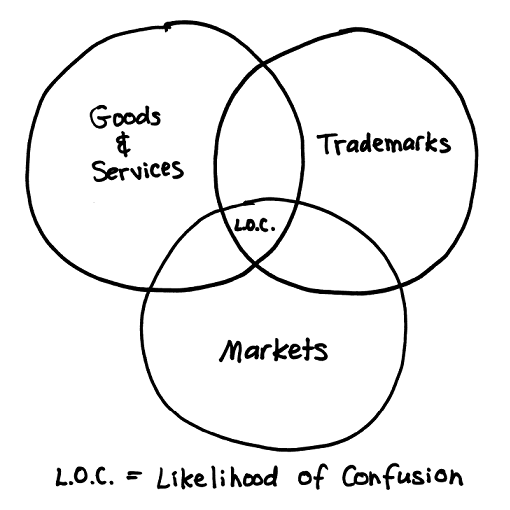
As is understood, a trademark is a mark that helps identify the origin or source of goods and services with the help of a uniquely differentiable graphical representation, which may be manifested in the form of a sign, symbol, word, label, or even a combination of several elements put all together. Therefore, it aims to differentiate the goods and services of one from that of another in today's era of a global market, eliminating the risk of confusion and losses accompanied by such risks.


When a trademark is scrutinized by a Trademark Office or when it is underdetermination for possible infringement, it is often subjected to the test of "likelihood of confusion." Hence, in such a scenario, there is a clear division of parties and their interest. The party that first adopts a mark by using it in the market is termed as the Senior or First User, and the one that adopts a similar mark later than that of the Senior User comes to be identified as the Junior User.


The Initial Interest Theory: The Consumer Perspective

The main aim of a consumer while seeking a particular good or service is finding a distinguished quality and preferred price. Due to the plethora of options available in the physical market and the digital space, there has been an unprecedented growth in the number of counterfeit goods, which misappropriate trademarks resulting in consumer confusion. The initial interest theory is often taken into consideration by judges and courts to understand the psychology of consumers when contemplating similarities between trademarks by considering the imperfect recollection memory of a consumer, the behavioral pattern of a consumer while deciding what to purchase, etc. This theory is further bifurcated into two crucial theories, which can be understood in the next segment.


The Forward Confusion Theory

In infringement cases, it is often witnessed that there is a small entity, which is a new entrant, wrongfully posing as another massive entity to take advantage of the established reputation and goodwill by simply creating consumer confusion while misrepresenting its trademark. A deliberate attempt to create confusion is made to suggest an affinity with a Senior User, which harms the commercial and moral interest of the Senior User as well as that of the consuming audience since such goods often under-deliver and underperform on the scale of quality and quantity.


The Reverse Confusion Theory

The very opposite of the forward theory of confusion is the theory of reverse confusion. In such cases, a consumer fails to distinguish between goods and services of the Junior and Senior User of a mark and associates the underlying products to be originating from the Junior User on account of a robust marketing and a saturated market. The same leads to a lack of recognition of the Senior User causing potential harm. It can be somewhat mindboggling.

The theory came much into the picture in Big O Tire Dealers, Inc. vs. Goodyear Tire & Rubber Co., wherein it was held that "the second use of a trademark is actionable if it simply creates a likelihood of confusion about the source of the first user's products."

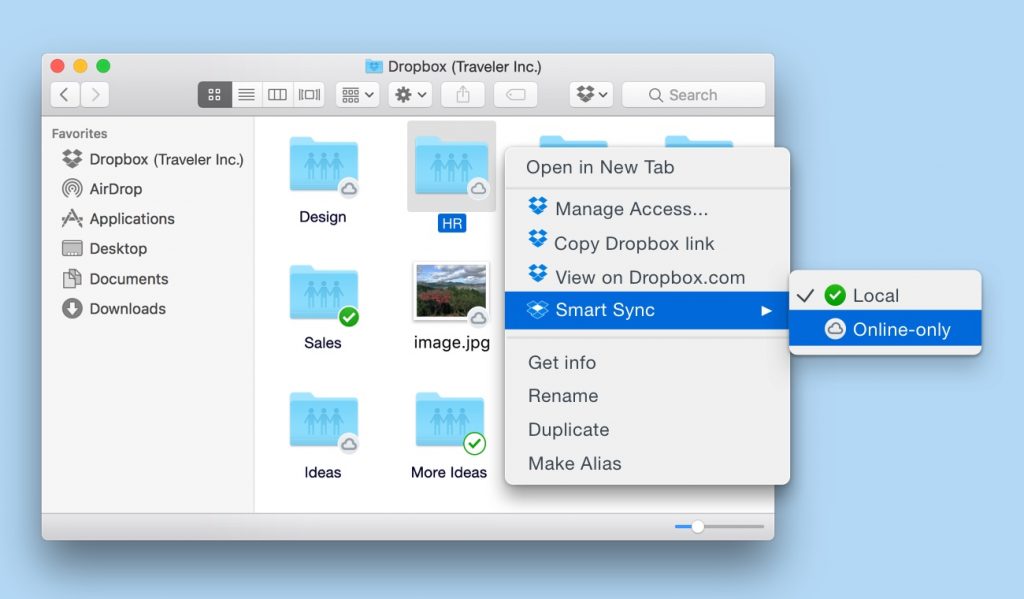
Last year, the case of Ironhawk Technologies, Inc. v. Dropbox, Inc. (decided on April 20, 2021) came forth to the Ninth Circuit, where the theory was under much speculation. Herein, the plaintiff was a computer software developer of 'SmartSync' developed in 2004, utilizing compression technology to enable an efficient transfer of data, particularly in bandwidth-challenged environments. Its products were sold majorly to the US Navy. Dropbox brought cloud storage software to be made accessible throughout the world. Its software featured 'Smart Sync' while enabling a user to see and access files in his Dropbox cloud storage account without using up any of the user's hard drive storage. Furthermore, Dropbox launched its Smart Sync feature in 2017 and was previously aware of Ironhawk's SmartSync mark. Ironhawk brought a case against Dropbox for the violations of the Lanham Act alleging Trademark Infringement and unfair competition, pleading that Dropbox's use of the name 'Smart Sync' intentionally infringed upon Ironhawk's 'SmartSync' trademark. At an earlier event, Dropbox had attempted to acquire Ironhawk, evidencing recognition of the competitor. The Ninth Circuit deduced in favor of Ironhawk since it stated that there was a likelihood of reverse confusion. However, when the case went for further trial, Judge Wallace Tashima found the judgment of the Ninth Court to be erroneous since Ironhawk only had a "sophisticated audience," unlike Dropbox, catering to a much wider audience. Therefore, it was found that it was unlikely that reverse confusion may have occurred.


Conclusion: Points of Consideration

There is no rigid test laid down to deduce the application of the theory of reverse confusion; however, courts have developed a case-bade modified multi-factor test. The underlying factors shall be taken into consideration when deciding on reverse confusion:


  • The conceptual strength of the mark - The courts evaluate whether the mark is suggestive, arbitrary, fanciful, or descriptive. The more strength it carries, the more distinctive it is. Therefore, if a mark is more distinctive, there is more likelihood of confusion since the attempt to imitate becomes rather apparent.
  • The similarity between the two marks: The court will determine the visual, ocular, and phonetic difference between the marks while drawing a comparison of the totality of the mark.
  • Possibility of actual confusion: The likelihood of confusion will be assessed considering the adjoining factors like channels of trade and commerce, the consuming audience, the quality and quantity of the product, etc.
  • The intention of the infringer


Even though the courts are bringing to consider such theories of confusion, it will be interesting to observe how they would grant awards supporting the theory since it may land a chilling effect by over-compensating the Junior User.

Wednesday, May 18, 2022

What are Neighboring Rights?


Copyright is that branch of Intellectual Property (IP) that protects and covers all creations that are a culmination of the creative human mind, irrespective of what form or merit they hold and the audience that consumes them. Copyright in creative works is created automatically and immediately, and therefore, it does not require a formal procedure to seek protection from a third party.

Additionally, copyright also vests in people who are not technically the authors of the work created; instead, they are crucial supporters and participants who make the work possible. These could include artists, producers of phonograms & others involved in television, radio & broadcasting. In them, vest certain rights known as the neighboring rights.

Cracking the Basics

The term 'neighboring rights' can be found in the World Intellectual Property Organization (WIPO) Glossary, which can be understood as a right granted to protect the interests of performers, producers of phonograms, and broadcasting organizations relating to the activities of the public use of an author's work. Often the term 'related rights' is also used to mean the same as neighboring rights. The notion of different countries has varied in determining the scope of these rights.

These rights are not essentially the same as copyright, but they are based on works protected by copyright. Most importantly, they offer the same exclusivity as copyright, albeit they do not cover the actual work.

Categories of Neighboring Rights

Neighboring rights can be segregated into three different kinds of categories, which are mentioned below:

  • Performer Rights: These rights vest in performers, which include musicians and actors. They protect their performances against any unauthorized and illicit recording or transmission. The same also gives the power to exploit and guarantee a certain degree of control over the exploitation and remunerations earned whenever these recordings, including their performances, are commercially exploited. It means that only when the performer's content has been legally obtained can the work be communicated to the public; otherwise, it shall be a violation of his neighboring rights.


  • Broadcasting Rights: These rights are vested in a broadcasting organization, including television, radio, or other telecasting providers. It means that where a live performance is facilitated by a broadcaster, he has all the rights to authorize or prohibit the use of the program. Hence, if the same program is recorded and put on the internet for the public to see, it is a violation of the broadcaster's rights.


  • Recording Rights: Similarly, by law, where a sound recording of someone has been recorded with the prior consent of a performer, the performer's consent is further required for any communication that is to be made to the public. Such rights can be enforced by the legal representatives of the performer or artist after his death.

What is the International Guiding Framework?

The Rome International Convention, also known as the International Convention for the Protection of Performers, Producers of Phonograms, and Broadcasting Organizations, specifies that performers have the right to oppose the broadcast, communication to the public, fixing, or reproduction of their performances. The Convention is one of the most crucial conventions on an international level, which was adopted way back in 1961. It is jointly managed and directed by the United Nations Educational, Scientific, and Cultural Organization (UNESCO), the International Labour Organization (ILO), and WIPO.


Apart from the Rome Convention, it is also a part of the TRIPS (Trade-Related Aspects of Intellectual Property Rights) Agreement, 1994, which came into force on 1st January 1995. The Rome Convention 1961 protects neighboring rights for up to 20 years from the end of the year in which the performance, the recording, or the broadcast of the work took place.


Other than the previously mentioned conventions, the WIPO Performance and Phonograms Treaty (WPPT) and the Beijing Treaty on Audio-Visual Performance (BTAP) also protect the performers, producers, and broadcasters in various ways that may appear to be more extensive in nature. They offer protection of neighboring rights for up to 50 years with an increased scope of protection of the rights of performers and producers while expanding into the digital era with the protection extended to the exploitation of protected works even over the internet.


Conclusion

It is imperative that the rights of each contributor in the creative ecology are sustained and preserved to give the due weightage of labor. Also, it is pertinent that in such preservation of rights, the freedom of information and access to knowledge are not compromised and liquidated. Therefore, it is integral to recognize the contribution of all artists related to the primary copyrighted work to incentivize further creation of art and culture by protecting rights underlying sounds, images, or both.

Till now, because of WIPO, authors, performers, and phonogram producers have been granted a broadly worded exclusive right of communication covering all the possible aspects of neighboring rights. It is essential to imbibe such international standards in national regimes to observe an expansion of such rights.


Monday, May 9, 2022

Safeguarding Fashion Shows: Copyright Laws on the Runway


Fashion shows in today's time are more than just a couple of models walking the ramp adorning beautiful clothes and accessories. Contemporary fashion shows involve the projection of stories and performances for which substantial investments and hustling of creative minds are required.

Consider the example of Fendi's iconic defile on the water of the Trevi Fountain in Rome or the angelic performances of Victoria's Secret models coupled with a live music performance by famous artists. These can and should be legally safeguarded to ensure that models ethically enjoy adequate protection.

The First Case to Provide Legal Protection: Ashby v. Gaulme, Kenzo et Lacroix


In the Ashby case, the Supreme Court opened new doors for including fashion shows in the non-exhaustive list of copyrightable works found in Article L.112-2. The case was brought forth by the French Federation of Couture, and five haute couture companies, which included Chanel, Christian Dior, and Hermes, against three photographers for uploading photographs and videos of the fashion shows on a website. A strict system to monitor and regulate the taking of photographs was developed by the French Federation of Couture, as per which Ashby and the other two photographers claimed that they were allowed to upload photographs on the internet to report the current event in consonance with the French Intellectual Property Code and the European Convention on Human Rights.

In the first instance, the photographers were not found guilty; however, the Paris Court of Appeal reversed the decision and gave a rather more elaborate form of protection to this form of art. The Court held that the photographers were guilty of Copyright Infringement not only of the claimants' apparel but also of the fashion shows themselves. Later, the photographers moved to the European Court of Human Rights (ECHR) for the alleged violation of freedom of expression. However, the matter was adjudicated in favor of the claimants again as the ECHR stated that the freedoms envisaged in the European Convention on Human Rights are not absolute in nature and are rather subject to some specific duties and responsibilities in addition to conditions, restrictions, or penalties.

Author of Fashion Shows

Now that it is ascertained that fashion shows can be safeguarded, it is crucial to determine who shall be considered the owner or author of this kind of work. Fashion shows are conducted through the cumulative efforts of several artists like architects, set organisers and designers, sound and light technicians, hairdressers, makeup artists, seamstresses, etc.

One way of safeguarding the rights of each of these contributors is utilizing the option of 'composite works,' where works cannot be segregated into parts. It allows everyone involved in the process to be recognized as a co-author of the component that is a part of the communion regime. Therefore, the same shall entitle all the co-authors to autonomously utilize and exploit the rights vested in the component, which is a culmination of their effort, unless the same is cited differently in writing.

Another way is to utilize the rights under the regime of 'collective works' where different components of the work can be broken down into separate segments. It allows individual and autonomous authorship.

The safest mode of safeguarding these rights is to transfer the rights vested in each individual to a company. It shall ensure that the rights are safeguarded well. Furthermore, it shall ensure that same or similar works are not replicated or slavishly imitated to promote fair competition and mutual appreciation of arts.

Fashion Models as Performers

Artists consist of several kinds of performers, not primarily limited to actors, singers, musicians, or dancers. A reflection of this can be found in the WIPO Performance and Phonograms Treaty stating that protection can be afforded to "actors, singers, musicians, dancers, and other persons who act, sing, deliver, declaim, play in, or otherwise perform literary or artistic works." The Rome Convention also extends a great deal of protection to performers, which can be deduced to be in favor of the rights of fashion models. Despite such interpretations, the national laws and regulations do not recognize the work of fashion models to be included in the definition of 'copyrightable work.' Therefore, this neglect of policymakers requires a shift from the traditional notions and understanding of Intellectual Property Rights (IPRs).

Objection to Treat Fashion Shows as Copyrightable Subject-Matter

One objection against safeguarding fashion shows under the copyright regime is they are a 'volatile' creation. Since they are displayed once and are most likely not to be repeated in the same medium and format, they have insufficient unity and definition. However, the fashion shows these days, as witnessed, often have a plot, a definite storyline, which could theoretically be repeated. However, 'fixation' of work or reproducing the same on paper is a prerequisite for claiming copyright in most parts of the world. But, there are some territories where less stringent laws apply in this aspect. As can be seen under Italian law, fixation is not required for Copyright Protection, and therefore, the oral manifestation of works is also protected. Furthermore, copyright protection in Italy can be granted to creations that vary over time within the lines of a given plot.

Another commonly raised objection is that unlike dramatic works or artistic performances, which primarily have a cultural aim, fashion shows have only an underlying commercial purpose. They are carried out only to support the launch and sale of fashion apparel and accessories. However, most laws do not impose any restrictions on the operation of copyright protection for works that have a commercial purpose. 

Conclusion

Although copyright protection in the domain of fashion shows and runways is comparatively ill-explored, it would be interesting to note how various national policymakers make way for such artists in their legal Intellectual Property (IP) regime. Until the stance on the matter settles, it would be a safer alternative for companies to conclude agreements clearly indicating and defining the scope of IPRs vested in the many contributors that aid in the facilitation of such fashion shows. The same would ensure the due exercise of economic rights in an orderly fashion.


Friday, May 6, 2022

Second Medical Use Claims

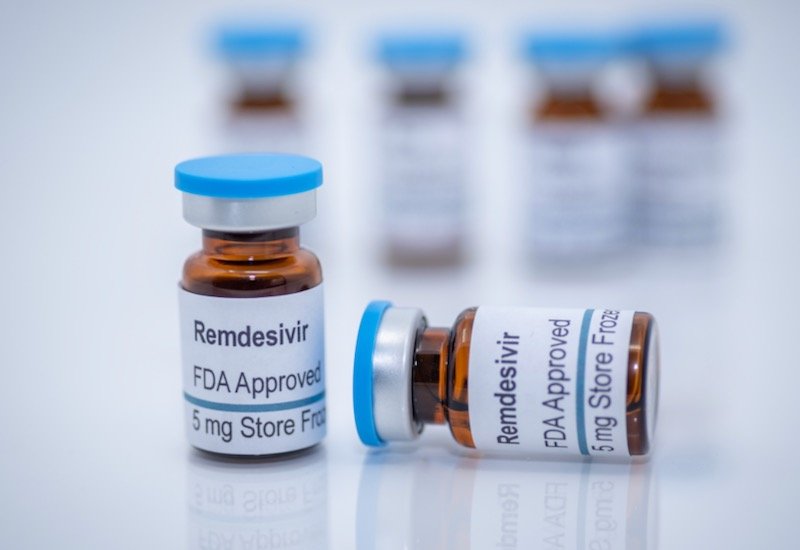
 The repurposing of drugs to find immediate solutions for new diseases is witnessed commonly in the pharmaceutical sector. In recent times, the same is instead a frequent instance to treat flues and viruses, as also perceived while identifying the solution for the Big-C, the 'Coronavirus.' The antivirals used to cater to diseases like HIV and SARS were clinically tested to adjudge their efficacy in the fight against COVID-19. Remdesivir, which was earlier utilized for the treatment of Ebola, is now used as a dose of Coronavirus vaccine. Similarly, acetylsalicylic acid, often known as Aspirin, was developed by Bayer in the year 1897 to treat pain and fever. However, it is now also utilized as an effective cardiovascular medicine that decreases the chances of suffering a heart attack or stroke. While the Patent Law safeguards the exclusive rights of an invention's proprietor up until a specific specified period, it also protects new uses of known drugs. Let us find out how.

Can a Patent be Sought for Second Medical Use Claims?

When a substance or composition is already known for primary medical use, it may still be safeguarded as a patent for a second or subsequent medical use; however, the proprietor must prove that such use is novel and inventive. Furthermore, such patents should be meticulously drafted and litigated.


There are several instances where existing medicines are being developed for new medical uses. Consider the following examples:

  • Sildenafil citrate, which is primarily used for heart and vascular diseases, came to be later marketed as a drug for erectile dysfunction.
  • Finasteride, primarily meant for the treatment of prostate disorders, was at a later stage found to be effective in the treatment of androgenetic alopecia.
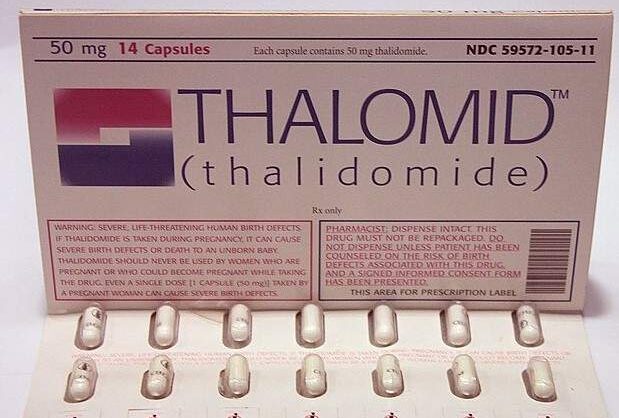
  • Thalidomide was patented for respiratory infections; however, its second use was found to help relieve morning sickness in pregnant women. Also, it was discovered to be useful in the treatment of diseases like leprosy and cancer.

The European Stance on Second Medical Use Claims

Second medical use claims were not permitted until a fairly long period in Europe. However, after 1984's landmark G5/83 decision, second medical use claims began to be acted provided they were written in the 'Swiss-type' format depicting:

"Use of Compound X for the manufacture of a medicament for use in the treatment of Disease Y."


This legal trend of the Swiss-type format was then substituted by the "purpose-related product claims" since it became the new mandate after the EPO Enlarged Board appealed the landmark G2/08 decision. A purpose-related product claim should be in the format depicting:

"Product X for use in the treatment of Disease Y."


The second medical use patent may address the following concerns:


  1. The use of a known drug to treat a new disease ("Known drug/new disease")

In most patent claims, the phrase "for use" is interpreted as "suitable for use." However, second medical use claims are an exception to this generality and are fully use-limited product claims. They can be used for the treatment of multiple diseases by covering them in a single claim, but the treatment of all such diseases must form a single general inventive concept as stipulated under Art. 82 EPC.

  1. The use of a known drug to treat a known disease using a new therapeutic method ("Known drug/known disease/new therapeutic use")

A second medical use claim can also be filed for the treatment of the very same disease in the form of providing a new therapeutic method in the form of a new dosage regime, administration mode, or patient group, as also provided under G2/08.


Issues Surfacing Second Medical Use Claims

Lord Justice Floyd once said, "Whilst it is widely recognized that there are valuable, sometimes life-saving inventions, which are made through the discovery of the new use of a known drug, their protection in patent law is problematic." Let us look into these problematic concerns.


The main reason for claiming a second medical use patent is to prevent third parties and competitors in the market from infringing upon the proprietary rights of the inventor. However, generic drug manufacturers are often seen flouting the laws to seek commercial gains. To prevent such acts of infringement, it is a settled law that purposeful arrangement should be proven. The purposeful arrangement can be understood as a form of use wherein there is a recommendation in the form of a packaging insert, labels, or on medical information slips or prescriptions, which are distributed along with the drug.


Also, it is considered infringement only if the generic manufacturer intends to use the second medical use claims for the treatment of the patented indication, proving which is undoubtedly an uphill battle. Therefore, generic manufacturers adopt the following measures to prevent being trapped in a series of endless litigations:

  • Using "skinny labels" by carving the patented indication from the medical leaflet, which comes along with the medicine;
  • "In-label use" - the use in an indication that is mentioned only generically on the label and not in the specific form that is patented; or
  • "Off label-use" - the use in an indication for which the drug has not received regulatory approval.


Furthermore, the problem heightens when we look at certain jurisdictions that do not offer any protection to second medical use claims. It includes countries like those in Latin America. Even mass producers of generic medicines like India do not afford any rigid and concrete protection against such patents.


Conclusion

It should be understood that inventions in the domain of pharmaceuticals involve great capital expenses and abundant research and development initiatives. Bringing a new molecule itself does not cost any less than one billion, and therefore, this time-consuming process is cushioned if second medical use patents are safeguarded. It is a relatively cheaper route; however, qualifying clinical trials of all stages is yet another elaborate affair. Therefore, laws should address the infringement issue of second medical use patents to protect these claims adequately while also keeping misuse like doubt patenting and illicit activities under check. It shall be interesting to observe how lawmakers juggle around this issue to afford better and affordable protection.

Understanding the Concept of Destination Branding through Trademark Protection

 The hospitality industry of India has undoubtedly become an exceedingly crucial service provider across the nation. Due to the increase in ...