Showing posts with label Trademarks. Show all posts

Monday, July 11, 2022

Contemplating the Theories of Confusion in Trademarks: Confuse No More!


As is understood, a trademark is a mark that helps identify the origin or source of goods and services with the help of a uniquely differentiable graphical representation, which may be manifested in the form of a sign, symbol, word, label, or even a combination of several elements put all together. Therefore, it aims to differentiate the goods and services of one from that of another in today's era of a global market, eliminating the risk of confusion and losses accompanied by such risks.


When a trademark is scrutinized by a Trademark Office or when it is underdetermination for possible infringement, it is often subjected to the test of "likelihood of confusion." Hence, in such a scenario, there is a clear division of parties and their interest. The party that first adopts a mark by using it in the market is termed as the Senior or First User, and the one that adopts a similar mark later than that of the Senior User comes to be identified as the Junior User.


The Initial Interest Theory: The Consumer Perspective
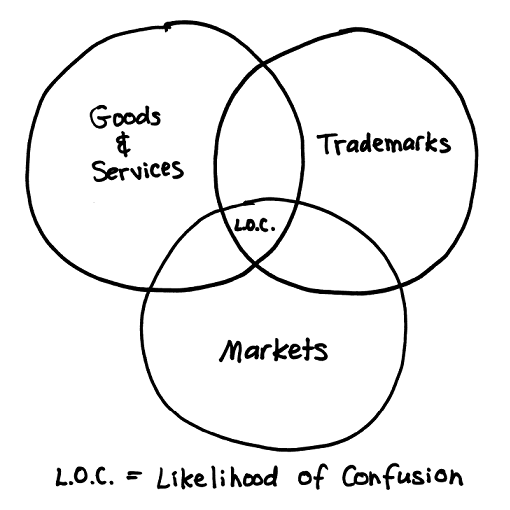
The main aim of a consumer while seeking a particular good or service is finding a distinguished quality and preferred price. Due to the plethora of options available in the physical market and the digital space, there has been an unprecedented growth in the number of counterfeit goods, which misappropriate trademarks resulting in consumer confusion. The initial interest theory is often taken into consideration by judges and courts to understand the psychology of consumers when contemplating similarities between trademarks by considering the imperfect recollection memory of a consumer, the behavioral pattern of a consumer while deciding what to purchase, etc. This theory is further bifurcated into two crucial theories, which can be understood in the next segment.


The Forward Confusion Theory

In infringement cases, it is often witnessed that there is a small entity, which is a new entrant, wrongfully posing as another massive entity to take advantage of the established reputation and goodwill by simply creating consumer confusion while misrepresenting its trademark. A deliberate attempt to create confusion is made to suggest an affinity with a Senior User, which harms the commercial and moral interest of the Senior User as well as that of the consuming audience since such goods often under-deliver and underperform on the scale of quality and quantity.


The Reverse Confusion Theory

The very opposite of the forward theory of confusion is the theory of reverse confusion. In such cases, a consumer fails to distinguish between goods and services of the Junior and Senior User of a mark and associates the underlying products to be originating from the Junior User on account of a robust marketing and a saturated market. The same leads to a lack of recognition of the Senior User causing potential harm. It can be somewhat mindboggling.

The theory came much into the picture in Big O Tire Dealers, Inc. vs. Goodyear Tire & Rubber Co., wherein it was held that "the second use of a trademark is actionable if it simply creates a likelihood of confusion about the source of the first user's products."
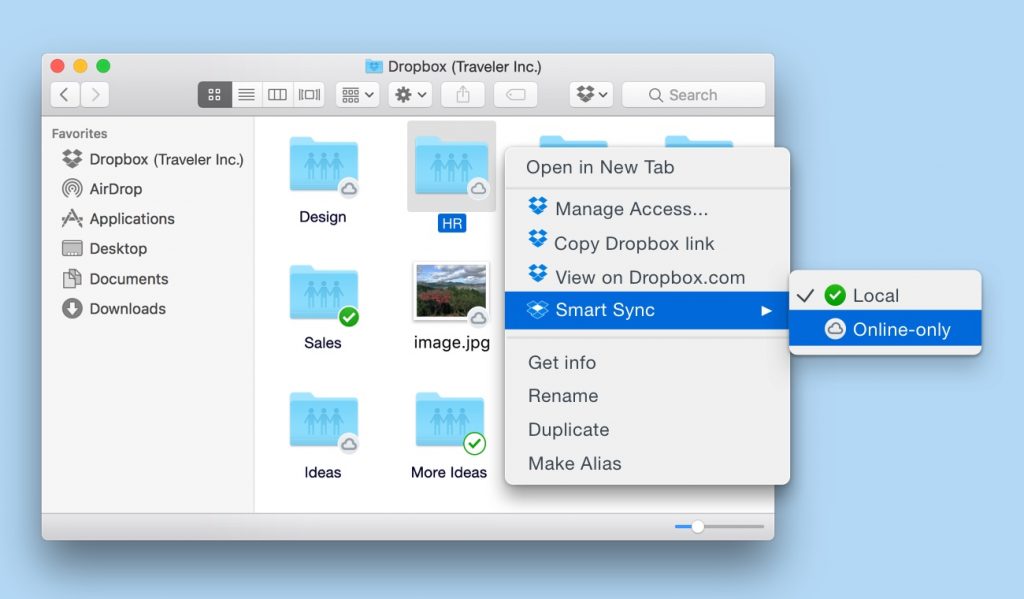
Last year, the case of Ironhawk Technologies, Inc. v. Dropbox, Inc. (decided on April 20, 2021) came forth to the Ninth Circuit, where the theory was under much speculation. Herein, the plaintiff was a computer software developer of 'SmartSync' developed in 2004, utilizing compression technology to enable an efficient transfer of data, particularly in bandwidth-challenged environments. Its products were sold majorly to the US Navy. Dropbox brought cloud storage software to be made accessible throughout the world. Its software featured 'Smart Sync' while enabling a user to see and access files in his Dropbox cloud storage account without using up any of the user's hard drive storage. Furthermore, Dropbox launched its Smart Sync feature in 2017 and was previously aware of Ironhawk's SmartSync mark. Ironhawk brought a case against Dropbox for the violations of the Lanham Act alleging Trademark Infringement and unfair competition, pleading that Dropbox's use of the name 'Smart Sync' intentionally infringed upon Ironhawk's 'SmartSync' trademark. At an earlier event, Dropbox had attempted to acquire Ironhawk, evidencing recognition of the competitor. The Ninth Circuit deduced in favor of Ironhawk since it stated that there was a likelihood of reverse confusion. However, when the case went for further trial, Judge Wallace Tashima found the judgment of the Ninth Court to be erroneous since Ironhawk only had a "sophisticated audience," unlike Dropbox, catering to a much wider audience. Therefore, it was found that it was unlikely that reverse confusion may have occurred.


Conclusion: Points of Consideration

There is no rigid test laid down to deduce the application of the theory of reverse confusion; however, courts have developed a case-bade modified multi-factor test. The underlying factors shall be taken into consideration when deciding on reverse confusion:


  • The conceptual strength of the mark - The courts evaluate whether the mark is suggestive, arbitrary, fanciful, or descriptive. The more strength it carries, the more distinctive it is. Therefore, if a mark is more distinctive, there is more likelihood of confusion since the attempt to imitate becomes rather apparent.
  • The similarity between the two marks: The court will determine the visual, ocular, and phonetic difference between the marks while drawing a comparison of the totality of the mark.
  • Possibility of actual confusion: The likelihood of confusion will be assessed considering the adjoining factors like channels of trade and commerce, the consuming audience, the quality and quantity of the product, etc.
  • The intention of the infringer


Even though the courts are bringing to consider such theories of confusion, it will be interesting to observe how they would grant awards supporting the theory since it may land a chilling effect by over-compensating the Junior User.

Monday, August 24, 2020

Protecting your Brand's Integrity with a Trademark

 In the present fast-paced society and highly competitive environment, establishing a strong brand is pivotal to the success of every other business. Furthermore, protecting that brand deserves your utmost attention too. Yet, a lot of small scale businesses and startups nowadays overlook a crucial step in securing their brand - Trademark Registration.

What can be trademarked?

A trademark is a form of Intellectual Property (IP), which may be any unique name, word, symbol, or device used to identify and further distinguish the goods of one seller from those of others, for instance - Nike's Swoosh (logo). Besides, a trademark allows the seller to safeguard what's trademarked efficiently from both use and misuse by competitors while establishing brand loyalty among the customers. Trademarks also prevent confusion among the customers, who usually come to associate distinct attributes, to be specific quality, with a unique brand.

From a branding perspective, you can protect several assets, including names, taglines, logos, and packaging. However, it is imperative to make a point of the fact that these assets can obtain Trademark Protection only if they meet the subject matter eligibility. A phrase or word that's commonly used or already connected with another service or product in the same industry can't be trademarked. Let's consider an example to understand it. A generic term like "search engine" can't obtain trademark protection; however, a unique name like "Google" can. On the other hand, if your name is generic but used in the industry that's typically not related to the meaning of the term, then you may be able to trademark it, for instance - Apple (tech giant).

As a general rule, you can go ahead with trademarking your business name, if in case you use it while advertising to your target audience directly. If you are not making use of your business name in direct communication with your customers, then you can't obtain trademark protection for it as you are not connecting your name to your brand and also its attributes. Without any second thoughts, if your business name will be a critical part of your overall marketing strategy, then you must consider trademarking it. Additionally, the logo and tagline of your brand can also prove to be exceedingly good candidates for seeking trademark protection. The first litmus test corresponds to whether they are unique or not. The aspects that make a logo unique are the combination of the symbol with the company or brand name, their spatial relationship, and the colors. If the brand's tag line is a unique phrase, then you can consider trademarking it as well. For instance, Apple's "Think Different" connects its brand attribute, that is, quality, to its products.

The Trademark Registration Process

It is not necessarily expensive to obtain trademark protection. In the US, whoever establishes priority in a proposed mark is generally considered as its owner. To keep it straightforward, if you are the first company or individual using a unique mark for identifying your services or products, you don't need to register it for gaining the corresponding Trademark Rights. However, you must add the TM symbol to the brand to which you are claiming rights. Still, it is not a substitute for registering a proposed mark through the US Patent and Trademark Office (USPTO), which indeed establishes ownership to a great extent and beyond a doubt.

It is crucial to keep in mind that everything depends highly on the uniqueness of your proposed mark. In today's digital era, the Internet is undoubtedly a brilliant platform for starting your Trademark Search. You can proactively visit the free websites, like the ones maintained by the USPTO, to make yourself familiar with the already existing trademarks. Besides, you can also consider hiring an attorney specializing in the Trademark Law for conducting detailed searches.

In the US, a trademark can be registered at the federal or state level. State-level trademark registrations are expensive and less potent than the federal trademark registrations. Quite often, a trademark is registered within one industry; however, it may be registered in more than one as well. The best option, without any doubt, depends on the scope of your business and its geographic area of operation. International trademark protection is much more costly, extremely complicated, and expensive to enforce.

If you go ahead with filing a Trademark Application with the USPTO, then it will make sure that no other trademark similar to yours exists. The trademark registration process can take months. Therefore, it is highly advisable to do your homework well, because if your proposed mark resembles an already existing trademark, then your trademark application will face rejection.

It is a matter of fact that yes - the more you try to differentiate your brand from others in the industry, the more convenient it will be for you to safeguard it in the best possible manner. So, pick a name or logo that identifies your brand uniquely and protects it from your competitors.

Ref: https://www.kashishworld.com/blog/protecting-your-brands-integrity-with-a-trademark/

An Overview of Trademark Registration and Protection in Nigeria

 Nigeria, a sovereign country located on the western coast of Africa, is the most populous nation with the largest economy in the continent. It also has a fast-growing services sector with a rapidly increasing need for consumer goods. Without any second thoughts, all these factors do make Trademark Registration a crucial aspect in the nation.

GENERAL INFORMATION

In Nigeria, the Trade Marks Act, Cap T 13, the Laws of the Federation of Nigeria 2004 ("TMA"), and the Trademark Regulations 1990, form the legal basis of trademark registration and protection. The Act defines a trademark that is capable of identifying and distinguishing the source of the goods of one company or individual from those of others. A trademark may include a label, name, brand, device, heading, letter, word, signature, numeral, or any combination of these elements. When it comes to trademark registration, the Nigerian Trademark Law classifies goods into thirty-four (34) international classes. In Nigeria, multi-class Trademark Applications are not allowed; therefore, a separate application needs to be filed for registration in each of these classes. Also, unlike other jurisdictions, 'USE' is not a requirement for the registration of trademarks in Nigeria.

In Nigeria, the Trademarks, Patents, and Designs Registry (under the Commercial Law Department of the Federal Ministry of Trade and Investment) is the concerned trademark authority that governs and deals with the mechanism of trademark registration. The trademark application must be filed by the proprietor or an agent with the exception in the scenario of a foreign proprietor where a local agent must be hired. Except for the bureaucratic delays at the Registry, the time frame to complete the registration procedure is usually 12 to 18 months.

Trademark registration in Nigeria gives an owner the exclusive rights to the registered trademark corresponding to the specific goods or classes of goods in which it was originally registered. If a person or company uses the same trademark or any other mark similar or identical to it, which is likely to deceive or confuse the public, then it becomes a case of Trademark Infringement.

TRADEMARK REGISTRATION PROCEDURE IN NIGERIA

  1. TRADEMARK SEARCH - Before filing the trademark application, it is highly advisable to perform adequate trademark searches and determine the availability of the proposed trademark.
  2. REQUIREMENTS - The following documents and details are required to go ahead with trademark registration in Nigeria:
    • Details of the applicant or proprietor, including name, nationality
    • Well-defined representation of the proposed trademark
    • Class and specification of goods or services for which the proposed trademark is to be registered
    • Power of Attorney (POA) duly signed by the applicant, and where the applicant is a body corporate, by an officer who is authorized to do the same. Note - No legislation or notarization of this document is required.
  1. TRADEMARK APPLICATION FILING - Once all the details in the trademark application have been filled and the same is submitted along with the required documents, the Registrar shall issue an Acknowledgement Form, which confirms the receipt of the trademark application by the Registry. Also, a temporary number is allocated to the pending trademark registration.
  2. EXAMINATION - The Registrar then examines the proposed trademark to ensure that there is no already existing conflicting trademark, which may preclude its registration. The examination process shall also extend to whether the mark is deceptive, distinctive, or scandalous in any way or not. The proposed trademark must not contain prohibited words, names of single chemical substances, national flag, Arms of Nigeria or state, names of cities, towns, places, and societies, names of living persons or persons recently dead (except with permission).

If the Registrar gets satisfied with the proposed trademark, he or she shall issue an Acceptance Form, which is generally issued within three (03) weeks after the issuance of the Acknowledgment Form. In the other scenario, a Refusal Form will be issued. In the case of acceptance, the application will be published in the Trademarks Journal to notify any interested party that may have an objection to the said trademark registration.

  1. OPPOSITION - Any interested party may initiate the opposition proceedings by giving a notice of opposition within two (02) months of the publication of the proposed trademark in the Trademarks Journal. It is imperative to make a point of the fact that this period is non-extendible. The hearing of the opposition takes place before the Registrar, who shall take the decision after listening to both the parties and considering all the evidence in the matter. Additionally, the decision of the Registrar in this matter may be appealed to the Federal High Court.
  2. REGISTRATION - If no opposition proceedings are initiated against the proposed trademark or the oppositions are resolved well in favor of the applicant - the Registrar shall issue the Certificate of Registration to the applicant.

TRADEMARK PROTECTION AND RENEWAL TERM IN NIGERIA

In Nigeria, trademarks are registered for an initial period of seven (07) years starting from the date of the application, which can be further renewed indefinitely for periods of fourteen (14) years.

Ref: https://www.kashishworld.com/blog/an-overview-of-trademark-registration-and-protection-in-nigeria/

Thursday, January 30, 2020

What is the Difference Between Trademark and Geographical Indication


Difference Between Trademark (TM) and Geographical Indication(GI)


Let us now consider a few points that shall help us in differentiating between a trademark and GI.
  1. A trademark can be name, sign, or identity of a brand or business, which further differentiates the goods or services of one business entity from the others. A technology company is still a technology company; however, based on the manufacturer's trademark, it can be well-distinguished. For instance, Microsoft and Apple are the Registered Trademarks of individual technology companies.
  2. A Trademark Registration is usually filed by a single business entity or individual, whereas Geographical Indication Protection is granted to a group of manufacturers, who belong to a particular location, where the good was first originated.
  3. Only a single person, business entity, or a manufacturer can use a registered trademark, while all the producers or manufacturers in the same locality or region are permitted to the use the same GI.
  4. A trademark can be a word, letter, numeral (or numerals), a combination of numerals and letters, hologram, sound, smell, an abbreviation, a name, or a device. However, GIs can only be names or symbols corresponding to a particular region or place.
  5. A trademark is a result of human creativity or intellect, which further determines its uniqueness or distinctiveness. A trademark can be suggestive, arbitrary, or distinctive. On the other hand, GIs identify the goods based on their place of origin. Factors like climate, topography, human work (of a specific geographical location), amongst many others, determine the nature of the GIs.

Understanding the Concept of Destination Branding through Trademark Protection

 The hospitality industry of India has undoubtedly become an exceedingly crucial service provider across the nation. Due to the increase in ...