Showing posts with label Trademark Protection. Show all posts

Friday, June 16, 2023

India - Trademark Protection for the Hospitality Industry

The hospitality industry of India has undoubtedly become an exceedingly crucial service provider across the nation. Due to the increase in tourism, the role of restaurants and hotels has also increased. By establishing a brand name, a service provider in the hospitality industry can benefit from having many customers and build a good reputation. However, there is a risk involved in this scenario – with the brand names of hotels and restaurants becoming popular, other service providers in the industry might misuse this popularity to gain an unfair advantage. Therefore, to protect your business in the hospitality industry, you must seek protection via Intellectual Property Rights (IPRs), specifically by registering your hotel or restaurant brand name and logo as trademarks. Here in this article, we shall shed light on the relationship between Trademark Law and the hospitality sector in India.


Relationship between Trademark Law & the Hospitality Industry

A trademark refers to any mark capable of being represented graphically, identifying the products or services of one and distinguishing them from those of others in the market. Hotels and restaurants must get their brand names and logos registered as trademarks for the ease of operating a business in India. Brands and businesses need to identify the Class under which their products or services fall. The same is done through the Nice Classification of Goods and Services, which, in 2010, added Class 43 for restaurants and hotels. Kindly note that a few services can’t be registered for in Class 43, including arranging travel by tourist agencies, rental services for real estate, preservation services for food and drinks, discotheque services, rest and convalescent homes, and boarding services.

If hotels and restaurants wish to have a more extensive and holistic Trademark Protection in place, they can register their proposed trademarks under other trademark Classes. Doing the same shall help them secure the varied services provided by them. Such trademark Classes include:

  • Class 3 – Dealing with cosmetics, essential oils, perfumes, etc.
  • Class 16 – Dealing with stationery material, such as office requisites, letterheads, printed matter, etc.
  • Class 25 – Dealing with headgear, footwear, and clothing.
  • Class 35 – Dealing with office functions, advertising, business administration, and business management.

Trademark for the Taj Mahal Palace Hotel

The Indian Hotels Company Limited filed a Trademark Application for the Taj Mahal Palace Hotel in Mumbai and obtained its registration. It was the first ever hotel to get a trademark registered for its building. The trademark is registered in Class 43 for the image and the Tower Wing Exterior of the Taj Mahal Palace Hotel. Internationally as well, similar trademarks have been filed and registered, such as the Sydney Opera House in Australia, Eiffel Tower in Paris, and Empire State Building in New York.

With the Trademark Registration of the Taj Mahal Palace Hotel’s building, the Indian Hotels Company can undoubtedly ensure protection from:

  • Entities that may use the image of the Taj Mahal Palace Hotel for commercial purposes without having adequate authorization
  • Entities that may sell products with the image of the Taj Mahal Palace Hotel, which leads to Trademark Infringement

Obtaining trademark protection for the Taj Mahal Palace Hotel is essentially stronger than copyright or industrial design protection since they deal with the commercial and aesthetic value of the property, respectively. Registering the architecture of a hotel as a trademark leads to a landmark, which acts as a source indicator and generates more revenue. Furthermore, in Rock and Roll Hall of Fame and Museum v. Gentile Production, it has been ruled out that for a building to obtain trademark registration, it must create a distinct commercial impression performing the trademark function of identifying the source to the customers.

Understanding the Concept of Destination Branding through Trademark Protection

The hospitality industry has grown immensely with destination branding, thereby finding its significance in tourism. Destination branding refers to the concept of promoting one specific location or place using a tagline or logo. The same is then safeguarded under trademark law.

It acts as an incentive for the consumers or for them to visit the place and enjoy the experience assured by the promoter. The concept as a whole came to the picture in different states and cities of India and worldwide to promote tourism.

For instance, the ‘Incredible India’ campaign was introduced in 2002 in India to promote and advertise the nation’s rich heritage and culture.  The corresponding logo and wordmark got registered as a trademark (to avoid any misuse or misappropriation) in 2007 under Class 39, which deals with packaging, storage of goods, transport, and travel arrangements.

Kindly note that destination branding fails if there is political instability in a region or incompetent implementation of measures for enhancing tourism.

Trademark Protection for Big Hotel Chains and Restaurants 

In India, big hotel chains and restaurants, like Shangri-La, JW Marriott, Radisson, Hyatt, Oberoi, etc., have realized the importance of safeguarding their products and services through Trademark Rights and registered them under various Classes. It may include boarding facilities, accommodation services, clothing items, shampoos, soaps, cosmetics, stationery items, advertising, etc.

Let us take the example of Radisson Hotels International Inc. It has registered several trademarks, including RADISSON BLU, RADISSON RED, RADISSON INDIVIDUALS, and RADISSON MEETINGS, under Class 43. For accommodation services, reservation services, and award programs for customers, the hotel has registered two trademarks, namely RADISSON and RADISSON GOLD AWARDS, under Class 16. Clothing items, such as jackets, shirts, hats, bathrobes, etc., produced under the name of Radisson, have also been trademarked under Class 25. The hotel’s cosmetics, soaps, and shampoos have been registered in Class 3.

Therefore, hotels and restaurants in India should aim for all-inclusive trademark protection. They must look forward to protecting their distinctiveness, brand name, and reputation from the usage of any fraudulent marks.

Wednesday, February 2, 2022

Trademark Maintenance: How To Keep Your Trademark Alive & Breathing?

 A


n essential part of a trademark's lifecycle does not begin and end at securing its registration. It is imperative to maintain the mark continuously to benefit from the said registration. The same requires constant vigilance and ensuring all checks and balances that we shall be looking into in this article.


Understanding Trademark Maintenance

Trademark maintenance stands for the activities that enterprises or individual rights holders undertake to ensure the constant validity of their trademarks post-registration. The scope of maintenance essentially includes the following:

  • Filing for Renewal
  • Sending Cautionary Notices
  • Payment of Taxes
  • Filing Affidavit of Use

Let us understand each of these subjectively.

1. Filing for Renewal

The process of filing for renewal may differ in each jurisdiction the renewal action is sought. There is no upper limit set as to the number of times the renewal may be sought. However, the renewal application must be filed if one wants to enjoy the set of rights availed upon registration of the trademark after the lapse of the duration of the trademark, which is usually ten years after the date of application. The responsibility to ensure that the renewal is filed for before the due date lies on the respective rights holder, even though the Trademark Office does generate an auto-intimation mail. Therefore, it is necessary to remember one's renewal date.

2. Send out Cautionary Notices

It is pertinent for the rights holder to make publications to notify the competing parties and the public, in general, that the trademark is his proprietary asset and any infringing behavior will not be tolerated. Doing the same helps establish that the owners have advertised and made efforts to make their mark well known and prevent any person from adopting the said mark dishonestly. Also, where trans-border rights are sought, it helps send out cautionary notices to respective trademark offices that enable advertisements. It holds for countries like Eritrea, Maldives, Myanmar, etc.

3. Pay Your Taxes

The trademark owners must pay the income taxes imposed by their respective governments every year in an orderly fashion and format.

4. Affidavit of Use


In many countries, the declaration of use or affidavit of use is often filed along with the request for renewal. In this legal document, the proprietor of a mark is required to showcase a specimen that the trademark has been used in commerce on one of the goods and services in each international class, as may be claimed in the application for registration. An appropriate example can be the specimen of the label affixed on containers or boxes of the goods, literature available on the goods like sale receipts or invoices, copy of advertisements, etc.

Additional Points of Consideration

  1. Use the Appropriate Trademark for Which You Filed the Application

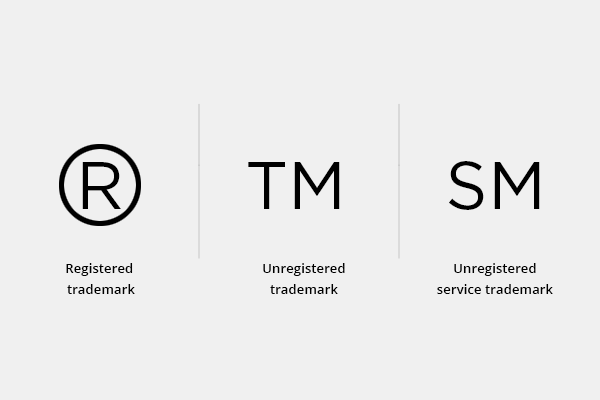
Upon registration of the mark, the rights holder must utilize the same representation of the mark that has been registered since it provides strength to the mark. Furthermore, before obtaining registration, the rights holder shall make use of the 'TM' symbol; however, it is beneficial to use the 'R' symbol post-registration as it enables the public to know that substantial effort and investment has been made by the proprietor to safeguard his proprietary mark.


  1. Don't Give in to Genericide

'Genericide' is a term often used to denote the end of those marks that become so common that they can barely be used to trace the actual origin of the mark to one proprietor. It stands correct for marks like 'xerox,' 'escalators,' and 'Kleenex.' These three were first used as trademarks, but at a later stage, they became generic as people began to identify these as a class of goods itself rather than just a good originating from a particular proprietor, which failed the basic purpose of seeking Trademark Registration. Therefore, it is necessary to address and govern who is using your mark and in what manner.


  1. Constant Vigilance on New Filings

It is necessary to keep a tab on any new filings, not just in the jurisdiction where one has registered his marks but also in prospective jurisdictions where further expansion may be sought. Therefore, a proper Trademark Search should be routinely conducted to ensure that the strength of the mark is not diluted due to a new entrant.


  1. Don’t Shy Away from Enforcing Your Mark

After obtaining registration of the mark, it is necessary to watch out for similar trademarks, which may be riding on your reputation to gain an unfair advantage in the market. Therefore, it requires constant vigilance and taking prompt action against such illegal and unsolicited use of your mark. It also helps create an impression in the market that the rights holder is aware of his rights and will not shy from taking the infringers to court.


  1. Update Your Trademark Portfolio

With time, a rights holder may venture and adapt to newer markets while expanding the scope of his goods and services, which were initially reflected in his Trademark Application. Where any expansion is sought, it is necessary to file for additional trademarks to ensure that the trademark is also reserved for new classes of goods and services.


Consider, for example, that a registered trademark 'XCV' is used for marking school bags and laptop bags; the proprietor also begins to market school uniforms and books at some later stage after establishing the prior business. The same would require him to file another registration for the newly added goods to extend Trademark Protection to those goods as well.


  1. Beware of Scammers

Many cybersquatters are waiting on the fence to extort hefty amounts from proprietors of marks. In addition to such digital nuisance, there is no dearth of scammers on the internet who send out unsolicited third-party mails appearing as if they are associated with some trademark office where one may have registered a trademark. However, these are scammers making suspicious communication, trying to derive vital information and trade secrets from the proprietor. Therefore, it is necessary to be aware of such unscrupulous entries. Many trademark offices make known the public of such entities through public advertisements as well.

Conclusion

Therefore, it can be concluded that with registration comes a set of rights but also a responsibility of maintenance. The actual trademark lifecycle begins only after the trademark has been registered since it requires constant vigilance and directing recourses and attention in the right frame to ensure that no unfair advantage is scraped out in favor of the third parties. The points stated above should be taken into serious consideration to derive the absolute advantage of one's mark.

Thursday, July 8, 2021

TRADEMARK AND COPYRIGHT PROTECTION IN BELGIUM


Belgium, officially known as the Kingdom of Belgium, is a country in Western Europe. 


KEY POINTS - TRADEMARK PROTECTION


  • Trademark Law - The Benelux Convention on Intellectual Property (trademarks and designs), which entered into force on March 1, 2019 
  • Classification - Nice Classification, 11th Edition
  • Filing System - Single-Class Filing System
  • Opposition Term - 02 Months 
  • Registration Term - 10 Years from the Date of Application
  • Renewal Term - 10 Years
  • Grace Period for Trademark Renewal - 06 Months
  • Non-Use Cancellation Period - 05 Years from the Date of Registration


KEY POINTS - COPYRIGHT PROTECTION 


  • Copyright Law - The Belgian Code on Economic Law 
  • Copyright Protection Term - Lifetime of the author plus seventy (70) years following his death; however, the duration of copyright protection varies depending on the type of work.


Stay tuned for our next post on 'Patent & Industrial Design Protection in Belgium.' 


Monday, August 24, 2020

Protecting your Brand's Integrity with a Trademark

 In the present fast-paced society and highly competitive environment, establishing a strong brand is pivotal to the success of every other business. Furthermore, protecting that brand deserves your utmost attention too. Yet, a lot of small scale businesses and startups nowadays overlook a crucial step in securing their brand - Trademark Registration.

What can be trademarked?

A trademark is a form of Intellectual Property (IP), which may be any unique name, word, symbol, or device used to identify and further distinguish the goods of one seller from those of others, for instance - Nike's Swoosh (logo). Besides, a trademark allows the seller to safeguard what's trademarked efficiently from both use and misuse by competitors while establishing brand loyalty among the customers. Trademarks also prevent confusion among the customers, who usually come to associate distinct attributes, to be specific quality, with a unique brand.

From a branding perspective, you can protect several assets, including names, taglines, logos, and packaging. However, it is imperative to make a point of the fact that these assets can obtain Trademark Protection only if they meet the subject matter eligibility. A phrase or word that's commonly used or already connected with another service or product in the same industry can't be trademarked. Let's consider an example to understand it. A generic term like "search engine" can't obtain trademark protection; however, a unique name like "Google" can. On the other hand, if your name is generic but used in the industry that's typically not related to the meaning of the term, then you may be able to trademark it, for instance - Apple (tech giant).

As a general rule, you can go ahead with trademarking your business name, if in case you use it while advertising to your target audience directly. If you are not making use of your business name in direct communication with your customers, then you can't obtain trademark protection for it as you are not connecting your name to your brand and also its attributes. Without any second thoughts, if your business name will be a critical part of your overall marketing strategy, then you must consider trademarking it. Additionally, the logo and tagline of your brand can also prove to be exceedingly good candidates for seeking trademark protection. The first litmus test corresponds to whether they are unique or not. The aspects that make a logo unique are the combination of the symbol with the company or brand name, their spatial relationship, and the colors. If the brand's tag line is a unique phrase, then you can consider trademarking it as well. For instance, Apple's "Think Different" connects its brand attribute, that is, quality, to its products.

The Trademark Registration Process

It is not necessarily expensive to obtain trademark protection. In the US, whoever establishes priority in a proposed mark is generally considered as its owner. To keep it straightforward, if you are the first company or individual using a unique mark for identifying your services or products, you don't need to register it for gaining the corresponding Trademark Rights. However, you must add the TM symbol to the brand to which you are claiming rights. Still, it is not a substitute for registering a proposed mark through the US Patent and Trademark Office (USPTO), which indeed establishes ownership to a great extent and beyond a doubt.

It is crucial to keep in mind that everything depends highly on the uniqueness of your proposed mark. In today's digital era, the Internet is undoubtedly a brilliant platform for starting your Trademark Search. You can proactively visit the free websites, like the ones maintained by the USPTO, to make yourself familiar with the already existing trademarks. Besides, you can also consider hiring an attorney specializing in the Trademark Law for conducting detailed searches.

In the US, a trademark can be registered at the federal or state level. State-level trademark registrations are expensive and less potent than the federal trademark registrations. Quite often, a trademark is registered within one industry; however, it may be registered in more than one as well. The best option, without any doubt, depends on the scope of your business and its geographic area of operation. International trademark protection is much more costly, extremely complicated, and expensive to enforce.

If you go ahead with filing a Trademark Application with the USPTO, then it will make sure that no other trademark similar to yours exists. The trademark registration process can take months. Therefore, it is highly advisable to do your homework well, because if your proposed mark resembles an already existing trademark, then your trademark application will face rejection.

It is a matter of fact that yes - the more you try to differentiate your brand from others in the industry, the more convenient it will be for you to safeguard it in the best possible manner. So, pick a name or logo that identifies your brand uniquely and protects it from your competitors.

Ref: https://www.kashishworld.com/blog/protecting-your-brands-integrity-with-a-trademark/

An Overview of Trademark Registration and Protection in Nigeria

 Nigeria, a sovereign country located on the western coast of Africa, is the most populous nation with the largest economy in the continent. It also has a fast-growing services sector with a rapidly increasing need for consumer goods. Without any second thoughts, all these factors do make Trademark Registration a crucial aspect in the nation.

GENERAL INFORMATION

In Nigeria, the Trade Marks Act, Cap T 13, the Laws of the Federation of Nigeria 2004 ("TMA"), and the Trademark Regulations 1990, form the legal basis of trademark registration and protection. The Act defines a trademark that is capable of identifying and distinguishing the source of the goods of one company or individual from those of others. A trademark may include a label, name, brand, device, heading, letter, word, signature, numeral, or any combination of these elements. When it comes to trademark registration, the Nigerian Trademark Law classifies goods into thirty-four (34) international classes. In Nigeria, multi-class Trademark Applications are not allowed; therefore, a separate application needs to be filed for registration in each of these classes. Also, unlike other jurisdictions, 'USE' is not a requirement for the registration of trademarks in Nigeria.

In Nigeria, the Trademarks, Patents, and Designs Registry (under the Commercial Law Department of the Federal Ministry of Trade and Investment) is the concerned trademark authority that governs and deals with the mechanism of trademark registration. The trademark application must be filed by the proprietor or an agent with the exception in the scenario of a foreign proprietor where a local agent must be hired. Except for the bureaucratic delays at the Registry, the time frame to complete the registration procedure is usually 12 to 18 months.

Trademark registration in Nigeria gives an owner the exclusive rights to the registered trademark corresponding to the specific goods or classes of goods in which it was originally registered. If a person or company uses the same trademark or any other mark similar or identical to it, which is likely to deceive or confuse the public, then it becomes a case of Trademark Infringement.

TRADEMARK REGISTRATION PROCEDURE IN NIGERIA

  1. TRADEMARK SEARCH - Before filing the trademark application, it is highly advisable to perform adequate trademark searches and determine the availability of the proposed trademark.
  2. REQUIREMENTS - The following documents and details are required to go ahead with trademark registration in Nigeria:
    • Details of the applicant or proprietor, including name, nationality
    • Well-defined representation of the proposed trademark
    • Class and specification of goods or services for which the proposed trademark is to be registered
    • Power of Attorney (POA) duly signed by the applicant, and where the applicant is a body corporate, by an officer who is authorized to do the same. Note - No legislation or notarization of this document is required.
  1. TRADEMARK APPLICATION FILING - Once all the details in the trademark application have been filled and the same is submitted along with the required documents, the Registrar shall issue an Acknowledgement Form, which confirms the receipt of the trademark application by the Registry. Also, a temporary number is allocated to the pending trademark registration.
  2. EXAMINATION - The Registrar then examines the proposed trademark to ensure that there is no already existing conflicting trademark, which may preclude its registration. The examination process shall also extend to whether the mark is deceptive, distinctive, or scandalous in any way or not. The proposed trademark must not contain prohibited words, names of single chemical substances, national flag, Arms of Nigeria or state, names of cities, towns, places, and societies, names of living persons or persons recently dead (except with permission).

If the Registrar gets satisfied with the proposed trademark, he or she shall issue an Acceptance Form, which is generally issued within three (03) weeks after the issuance of the Acknowledgment Form. In the other scenario, a Refusal Form will be issued. In the case of acceptance, the application will be published in the Trademarks Journal to notify any interested party that may have an objection to the said trademark registration.

  1. OPPOSITION - Any interested party may initiate the opposition proceedings by giving a notice of opposition within two (02) months of the publication of the proposed trademark in the Trademarks Journal. It is imperative to make a point of the fact that this period is non-extendible. The hearing of the opposition takes place before the Registrar, who shall take the decision after listening to both the parties and considering all the evidence in the matter. Additionally, the decision of the Registrar in this matter may be appealed to the Federal High Court.
  2. REGISTRATION - If no opposition proceedings are initiated against the proposed trademark or the oppositions are resolved well in favor of the applicant - the Registrar shall issue the Certificate of Registration to the applicant.

TRADEMARK PROTECTION AND RENEWAL TERM IN NIGERIA

In Nigeria, trademarks are registered for an initial period of seven (07) years starting from the date of the application, which can be further renewed indefinitely for periods of fourteen (14) years.

Ref: https://www.kashishworld.com/blog/an-overview-of-trademark-registration-and-protection-in-nigeria/

Friday, October 25, 2019

Malaysian Entrepreneurs Will Soon Have Access To Worldwide Trademark Protection

As per the newly-amended Trade Marks Act 2019, Malaysian entrepreneurs who file their trademarks under the Intellectual Property Corporation of Malaysia (MyIPO) will soon have access to worldwide Trademark Protection. Datuk Seri Saifuddin Nasution Ismail, the Minister of Domestic Trade and Consumer Affairs, announced the news on 23rd October 2019 by stating that this step aims at safeguarding the local entrepreneurs' brands and companies from being imitated worldwide. He mentioned that Malaysia has indeed seen cases, where well-established local products were imitated since they weren't trademarked by the trademark holder, and implementing this Act will prevent the occurrence of similar cases. He further said that the new Trade Marks Act 2019 shall allow entrepreneurs to trademark both non-traditional and traditional marks.


The previous Trade Marks Act of 1976 allowed entrepreneurs to trademark only traditional marks, including brands, names, labels, tickets, words, sentences, logos, signatures, or a combination of these. However, under the new Act, entrepreneurs can now file a Trademark Application for a range of other different marks like motion marks, sounds, holograms, patterns, positions, smells, shapes of products, etc.

The new Act also follows the recently-adopted Madrid System Relating to the Madrid Agreement Concerning the International Registration of Marks (Madrid Protocol), adopted in Madrid on 27th June 1989. The Madrid System has Malaysia as its 106th member. Other ASEAN countries acceding to the protocol include Indonesia, Singapore, Vietnam, Thailand, the Philippines, Cambodia, Laos, and Brunei. The Madrid System allows these countries to safeguard their brand in 122 countries, including Australia, the United Kingdom, Brazil, and the United States of America. Trademark owners in Malaysia would need to file only a single trademark application with MyIPO to register or file their local brands in the countries, which are a part of the Madrid System.

The Madrid System is an international treaty which is administered by the International Bureau of WIPO (World Intellectual Property Office). It allows the owners to seek trademark protection in several countries simultaneously by filing a single trademark application with a single office, that too in just one language, and by paying the fee only once.

Malaysian entrepreneurs can register their brands as trademarks under the new Trade Marks Act 2019, starting from 27th December 2019. MyIPO expects to have somewhere around 4000 new Trademark Registrations coming in the month of December. Saifuddin has also urged the entrepreneurs to register their brands or companies under the new Act as it will benefit them in many aspects, including customer loyalty and brand sustainability. Furthermore, the Customs Department will also be given the due authority to block the entry of counterfeit goods and products under the names of local entrepreneurs and notify the concerned authorities of the matter.

The new Trade Marks Act 2019 has also laid down more severe punishments for the offenders and the ones getting involved in Intellectual Property Infringement. People getting involved in Trademark Infringement can be fined up to RM1 million, jailed for a maximum of five years, or probably both.

Ref- https://www.kashishworld.com/blog/malaysian-entrepreneurs-will-soon-have-access-to-worldwide-trademark-protection/

Monday, September 16, 2019

LeBron James' Trademark Application for 'Taco Tuesday' Denied

Recently, the United States Patent and Trademark Office (USPTO), has turned down the Los Angeles Lakers basketball star LeBron James' Trademark Application for the phrase 'Taco Tuesday.' The USPTO stated that the proposed mark is a commonplace term. It further explained by saying that the phrase 'Taco Tuesday' is an expression or a message used by various sources to a great extent and solely conveys a familiar, well-recognized, or ordinary concept. Moreover, the office presented various news articles as evidence to show that people around the world widely use the phrase 'Taco Tuesday' to express their enthusiasm for tacos by celebrating and promoting them on the dedicated weekday, i.e., Tuesday.


The USPTO also referred to the similarity of 'Taco Tuesday' to another already existing trademark, 'Techno Taco Tuesday' owned by an entertainment company in Las Vegas. The office stated that removing a word from a Registered Trademark doesn't overcome a likelihood of confusion.

James had filed the trademark application last month on August 15, 2019, through his company LBJ Trademarks LLC, to use the phrase for online entertainment services, podcasting services, and his social media posts related to entertainment, sports, current events, and popular culture. His company also revealed their plans for using the phrase in marketing and advertising services.

According to The Los Angeles Times (a daily newspaper published in Los Angeles, California), a restaurant in Cheyenne, Wyo., already owns a trademark for the same phrase and has been aggressively protecting its Intellectual Property (IP) for quite a while now.
It seems as if Mr. James' attempt to trademark the phrase was seen as a possible means to free it for use by everyone.

For challenging the USPTO's move or refusal of the phrase, James and his team now have six months to respond. However, according to Josh Gerben, a lawyer specializing in trademarks, the refusal is pretty hard to overcome.

Ref: https://www.kashishworld.com/blog/lebron-james-trademark-application-for-taco-tuesday-denied/

Tuesday, September 10, 2019

LeBron James Seeks to Trademark the Phrase 'Taco Tuesday'


LeBron James, an American professional basketball player, has recently filed a Trademark Application with the US Patent and Trademark Office (USPTO) for the term 'Taco Tuesday.' The trademark request states that James wants to use the phrase corresponding to the marketing and advertising services offered by various passive, shareable, and viral platforms and channels like mobile marketing, internet marketing, social media, search engine marketing, and blogging. To be specific, the basketball star is willing to create a brand around his obsession and habit of eating Tacos on Tuesdays.

Irrespective of the fact that this trademark filing may appear to be somewhat off-the-wall, it does make sense. As of late, James has been making sincere efforts to expand his empire past sports into entertainment and various other realms. Without any doubt, Taco Tuesday has become a total event for his entire family. Quite frequently, he is seen on Instagram, posting stories of him eating Tacos along with screaming the phrase, "Taco Tuesday!" Moreover, he has even got T-shirts with the same phrase.

In any case, the extent that trademarks go, 'Taco Tuesday' has now become quite famous. The phrase is present worldwide and enormously used. However, the Wyoming-based chain, Taco John's, already owns the phrase as a trademark for their restaurants and has event sent cease and desist letters to the ones who try and use the phrase. Although they can't stop every restaurant or cafe in the country that attempts to use the phrase 'Taco Tuesday,' they are left having to try; if only so they don't lose the trademark themselves.
According to various reports, James and his team (LBJ Trademarks) aren't surely launching anything with the Taco Tuesday name as of now, and are still very much in the exploratory phases. Taco Tuesday will continue to remain a lifestyle for James till the time he doesn't own any exclusive Trademark Rights for the same.

Ref:

Wednesday, July 10, 2019

USPTO Rejects Cardi B’s ‘Okurrr’ Trademark Application


The US Patent and Trademark Office (USPTO), has rejected the trademark application of Cardi B, an American rapper and famous TV personality. Cardi B's attorney, Doreen Small, attempted to trademark her signature catchphrase, "Okurrr" earlier this year in March. Cardi B wanted to use this purported signature phrase on her merchandise, including T-shirts, undergarments, cups, and posters.


However, the USPTO declined the request by stating that the phrase is way too commonplace for obtaining Trademark Protection. It further mentioned that this phrase or expression is well-known and widely used by so many sources and conveys a well-perceived, ordinary concept or sentiment. It was likewise noted that the expression is commonly used in the drag community and by many famous celebrities as an alternate way of saying “Ok” or something that is said to assert when someone is being put in their place.

Till now, many other celebrities like the Kardashians had also used the same expression long before Cardi B filed its the trademark application, which the USPTO used as a justification for rejecting her request.

When the famous rapper appeared on “The Tonight Show with Jimmy Fallon” she said, “You know, it’s like a cold pigeon in the New York City” explaining the different versions of the phrase in her book depending on the situation. Moreover, during her cameo alongside Steve Carrell in Pepsi’s Super Bowl Commercial, she used the same phrase. Needless to say but even if the Grammy award winner can’t make it official; it’s still her trademark at this point as well.
 Ref : https://www.kashishworld.com/uspto-rejects-cardi-bs-okurrr-trademark-application/

Understanding the Concept of Destination Branding through Trademark Protection

 The hospitality industry of India has undoubtedly become an exceedingly crucial service provider across the nation. Due to the increase in ...