Showing posts with label patent. Show all posts

Wednesday, August 17, 2022

Patent Thickets: An Intertwining Web of Inventions


What are Patent Thickets?

In the words of Carl Shapiro, an American economist, a patent thicket is "a dense web of overlapping Intellectual Property Rights that a company must hack its way through to commercialize new technology." Some industries face the issue of patent thicketing more than others since few are regulated by fewer or single patents. For instance, the pharmaceutical industry usually has a product coming from a single patent that protects a molecule. However, in some other industries like the telecommunication industry, there are intertwined technologies protected by several patents. Consider a cell phone covered by at least 2,50,000 patents, including LCD, antennas, processors, batteries, etc. In such complex environments, it is necessary to gather access to all surrounding technologies to enable the protection of that individual cell phone.

Origin of the Defensive Strategy

Earlier in 1856, a group of entities jointly acquired a dominant position by patenting sewing machines, forming the first patent pool in the world that continued until 1877. Then, a company named Draper acquired an authoritative patent position for loom temples and consequently began a long-term practice of employing aggressive use of patent thickets. Since then, entities have formed multiple patent thickets in the last 150 years.
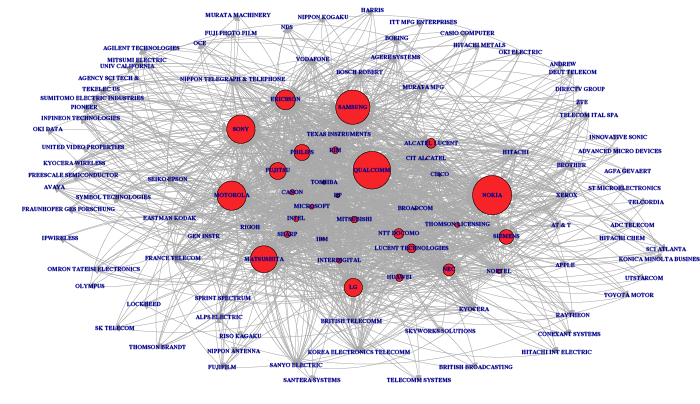
One of the earliest sectors to have adopted this strategy of 'mutual non-aggression' came to be witnessed in the semiconductor and computer industries leading to software companies obtaining several 'defensive' patents.

Even though the origins can be traced to 1856, it was in the 1970s that the term 'patent thicket' came to be used in common parlance when Xerox dominated the photocopier industry. These defensive thickets substantially decreased Research and Development (R&D) incentives for many upcoming inventors; however, they came as an advantage to those who became a part of it, reduced the transaction costs, and created a vertical monopoly.


Do Patent Thickets Prevent Innovation?

  • Patent thickets significantly disrupt innovation since the smallest components are owned by individual proprietors or independent companies that make the process of obtaining patents an uphill battle.
  • They increase the scope and number of patent litigations.
  • They complicate the process of negotiating licensing agreements due to an increase in the number of parties to a single transaction.
  • They weaken the inventive drive since they also encourage patent-ification of all small and, therefore, innumerable inventions and products.
  • They increase the cost of a patent transaction since newer patent holders are encouraged to seek prior approvals of proprietors of all small components incorporated in the invention.
  • They reduce the scalability of profits.
  • They potentially decrease the incentive to innovate.
  • The cost of the end product is ultimately heightened with patent thickets.


Thickets: A Burden on Common Man

Five of the top ten selling drugs in the United States of America include Humira, Enbrel, Keytruda, Revlimid, and Imbruvica. A total of 584 Patent Applications have been obtained after their initial Food and Drug Administration (FDA) approval. For example, on Humira itself, there are additional patents on the autoinjector device and a separate patent for the 'firing button' on the device. It is a typical case of patent thicketing.

The cost of these transactions is ultimately borne by the common man. Therefore, they heavily obstruct medical aid at reasonable prices. It also means they are a welcoming step for anti-competitive practices hindering the ability to negotiate.


Furthermore, it also promotes the evergreening of certain patents and creates a monopoly in the hands of a few. Again, let us take the example of Humira. The patent covering Humira had expired way back in 2016; however, the other 132 drugs thicketing the drug expire not before 2034. It implies the entry of biosimilars and generics as well. Yet, in the case of Mayor and City Council of Baltimore v. AbbVie Inc, 7th U.S. Circuit Court of Appeals, No. 20-2402, it was held that AbbVie did not block competition by erecting a thicketed fence.


Conclusion: Resolving the Issue and Untangling the Web

The following solutions and approaches can be adopted to prevent patent thicketing:

  1. Patent Pools: A patent pool requires "an agreement between two or more patent owners to pool their patents and license amongst themselves or to a third party on pre-determined licensing terms." This strategic outlook was also first adopted amongst the sewing machine entities resulting in the creation of a 'Sewing Machine Combination.' Since a patent pool may enable innovation in the early stages of a new invention being developed and harnessed, in the later times, it may lead to a serious threat of the creation of cartels that operate on supremacy and monopolization by regulating the market process, controlling demand and supply, etc. To prevent this, the USA has implemented a broad parameter, i.e., in the USA, the entire patent pool system has been brought under one parameter - blocking (essential) or complementary patents belong to a pool, while substitute or competing patents are to remain separate.


  1. Proactive Role of Courts: Courts should take proactive measures and stringent steps to accord protection to the IPRs of individual inventors. Therefore, the specialized knowledge of experts should be used to understand and adjudicate patent-related matters.


  1. Tougher Scrutiny to Grant Patents: The Patent System was introduced and implemented to inspire innovation and creativity, thereby enabling the growth of the economy while granting a monopoly for a limited time in return. However, the ordeal of granting patents way too easily for trivial innovations and unsubstantial products or processes has made the patent system discourage breakthrough innovations and ideas. The examiners and registrars should pay great attention to the state of the art and the knowledge of a person skilled in the art before deducing whether or not a patent shall be granted.


  1. Cross Licensing: Cross licensing agreements that license present portfolios and future inventions reduce transaction costs. To quote a few examples, Intel entered into many broad cross-licenses with other companies such as IBM, agreements between Microsoft and JVC, which came into being in 2008, and the agreement between Hewlett-Packard and Xerox to amicably settle their outstanding patent disputes.


Friday, November 8, 2019

Mahindra and Mahindra Receives Patent for Multimodal Solar Power System

Mahindra and Mahindra Ltd, an India-based multinational car manufacturing corporation, has recently received a new patent for its multimodal solar power system on vehicle rooftops, which shall help in utilizing solar power for various operations in a vehicle. The solar power system will support the operation of an air-conditioner and further reduce the electric load demand on the vehicle's battery.


As per the documents, the solar panels will be fixed on vehicle rooftops to act as a supplementary power source for electrical load demand while having no impact on the vehicle's aerodynamics. A sensor will support the control unit in identifying several different modes, including parked mode, running mode, and night mode, and further, take action accordingly. There will be absolutely no restriction on the type of vehicle as the solar power system will work with all types like a hybrid, combustion, or electric vehicle. Besides, with an extraordinary design, it will also operate efficiently at all times of the day.

In the running mode, the solar panel, selected as per the vehicle's requirements, charges the primary battery for reducing the load on the alternator and the power generator part - responsible for charging the battery and supplying the additional power to the electrical system of the vehicle.

In the parked mode, the solar panel charges the secondary battery of the vehicle for its night mode operation. After the batteries are fully charged, the solar power system powers the Air Conditioner (AC) and other cooling or heating accessories.

The night mode adds to an advanced feature of the solar power system, in which there is a secondary battery in the vehicle to support its electrical demands at night. The way it works is that the solar energy helps the solar power system in charging the secondary battery during the day so that it is ready for use at night, which further helps in ensuring reduced alternator load on the engine at the same time.

The solar power system helps in keeping the battery charged, which subsequently reduces the alternator load on the engine and saves a part of the power required for running the alternator to a great extent. Since at night, the vehicle uses the secondary battery charged during the day, there is a considerable decrease in the greenhouse gas emission even during the night time.

Mahindra and Mahindra, has informed the Patent Office that it hasn't filed any Patent Application concerning the same invention outside India. The company believes the concept and application that go behind utilizing the solar energy for charging different batteries or using the power for several different modes of the vehicle aren't obvious.

Ref- https://www.kashishworld.com/blog/mahindra-and-mahindra-receives-patent-for-multimodal-solar-power-system/

Friday, July 26, 2019

Protection of Domain Names


In today's highly competitive business environment, a domain name is one of the most valuable Intellectual Property (IP) assets a company could own. It is a matter of fact that yes; the choice of a domain name in this age of well-developed information technology is an important business decision as it leads to more publicity, popularity, and profitability of businesses. So, it is essential to wisely select your domain name and protect it irrespective of the fact whether you have been using it for years or have just acquired it.

Here are a few simple tips that owners should follow to protect their domain names:

1. Pay due attention to the administrative details
While registering the domain name, the owner should make sure that he or she is listed as the registrant, i.e., the legal owner of the domain name; the administrative contact, i.e., the individual who has the rights to alter the domain record; and the technical contact, i.e., the individual who will be responsible for addressing any technical issues with the domain name.

2. Always go for a reputable registrar
Large companies and organizations usually work with corporate registrars like MarkMonitor to manage their domain names efficiently. While using a retail registrar like GoDaddy or Network Solutions, the owner should ensure that the registrar is widely-known, responsive to the customers, and has been in the business for a long time.

3. Make sure to lock your domain name
Many domain name registrars provide the facility to lock, transfer lock, or register lock the domain name to prevent it from being deleted, modified, or transferred without the owner's prior and explicit permission.

4. Consider obtaining similar domain names
Domain name holders or owners should consider registering similar or alternative top-level domain names like .org, .biz, and .net along with the domain names based on either the misspellings or the plural version. 

5. Create a strong, unique password and protect it diligently
The owners should protect their domain names from unauthorized access by using a strong and unique password. Failing to do so could let someone else access your domain name, leading to its misuse.

6. Keep track of the renewal dates
The owners must establish a procedure to ensure that they do not unintentionally forget to renew the registration of their domain names. Owners with multiple domain names can even consider consolidating the renewal dates of all their domain names to make the process well organized. Additionally, renewing the domain name for multiple years could also prove to be beneficial.

7. Be aware of domain name scammers and others with evil intentions
Nowadays, unethical registrars often try to manipulate the domain name registrants into paying unnecessary charges. Therefore, the domain owners should be cautious while responding to any such suspicious emails from parties pretending to be the registrar of their domain names.

CONCLUSION
In today's internet age, your company's domain name not only adds credibility to your business but also builds your brand’s image by increasing its awareness. Domain names also help in generating traffic to your website, which results in more customers and better sales. Therefore, they must be efficiently protected to avoid any unforeseen circumstances, which might arise, leading to disruptions in business

Understanding the Concept of Destination Branding through Trademark Protection

 The hospitality industry of India has undoubtedly become an exceedingly crucial service provider across the nation. Due to the increase in ...