Showing posts with label Copyright Law. Show all posts

Thursday, August 12, 2021

Ambush Marketing: A Battle for Sponsorship

What is Ambush Marketing?

Ambush marketing is popularly known as coat-tail marketing or predatory ambushing, which is a practice of hijacking or co-opting another enterpriser's campaign to raise awareness of the ambushing company itself. It may occur by independent attacks in furtherance of attracting consumers' attention in general or may occur concerning a particular event where there is no clear divide between the sponsors and non-sponsors. The main aim of ambush advertisers is to deceive the customers into believing that they have an official association with the event without using the trademarks of third parties. Another aim is to attack the other for stealing its spotlight and liquidate the capital, effort, and resources spent by it.


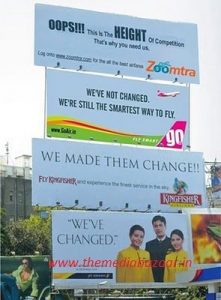
In simple words, it occurs when a particular brand owner makes an attempt to associate himself or herself with a particular event without paying for a sponsorship fee or tries to stifle the competition by intervening in the market practice adopted by that other. The same is generally observed during giant sports events like Super Bowls, IPL, World Cups, Common Wealth Games, etc., which can cause a hurdle for those who are the genuine sponsors of the said event. Consider the example of the Cricket World Cup where companies race for the tag of an 'official sponsor,' which costs them about $1.1 billion. PepsiCo got the deal of being a 'Title Sponsor' at a heavy bet of Rupees four hundred (400) crores for a five-year timeline. As mentioned above, it also may be generally deployed. An example of this is the battle between Audi and BMW for establishing billboard dominance. Here, Audi launched its A4 sedan while mocking BMW by saying, "Your move, BMW" - to which BMW responded by erecting a billboard beside the BMW poster saying, 'Checkmate,' announcing its series of new sedans.

The question of ambush marketing as a legitimate marketing practice is often questioned since it impacts and creates negative tension while demotivating official sponsors by violating their rights. It is, therefore, not the best method of marketing to attract consumers through honest business practices.


Why does an Enterprise Opt for Ambush Marketing?
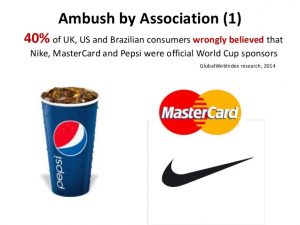
  1. Enforcement Issues: Enterprises go ahead with ambush marketing for events that generally attract a greater audience for the timeframe of the event, which is usually two to three days. It becomes difficult for the event organizers to exercise their legal options to prohibit such activity and receive quick redressal of their problems.
  2. Lack of Legal Jurisprudence: The prevalent laws for ambush marketing are very generic in nature. Moreover, as the judicial process requires a lot of effort and is time-consuming, only a few companies file infringement suits against ambush marketers. Also, since there is a lack of legal precedents and jurisprudence on the said matter, brands are reluctant to file lawsuits due to the ambiguity and uncertainty in the said domain.
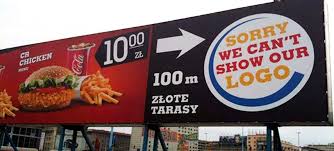
  3. Use of Disclaimers: Companies are putting up disclaimers stating that they are not the official sponsors of the said event to flee from potential infringement. Therefore, they continuously utilize the option of ambush marketing in favor of attracting the mass populace (consumers) without facing any legal trouble.


Kinds of Ambush Marketing
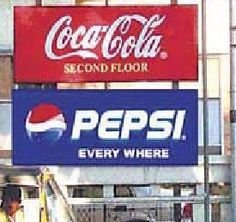
  1. Direct Ambushing: The most serious and offensive form of ambush marketing is the one that is direct in nature. In this kind of marketing, a brand intentionally connects itself to an event to appear as though it is affiliated to the event in which it has no rights, which directly attacks the rivals and authorized brands. It may be deployed by making unauthorized use of symbols (trademarks) or marketing elements by the infringing company. An example of this is the marketing strategy deployed by Sprints Communication Co. in the FIFA Football World Cup, as it used the event's official logo without the permission of the governing body. Also, while Nike was not the official sponsor for Olymics'96, it had put up massive billboards outside the stadium to deceive the audience into believing that it was the sponsor. Direct ambush marketing can take various forms, which are explained below:
  • Predatory Ambushing: It occurs when a company directly enters into a conflict with the competitor, due to which confusion surfaces around the actual official sponsor of the event. The same happened during the Winter Games'94 when Visa and American Express came face to face. Although Visa had the official sponsorship, American Express succeeded in touching the nerves of Amex, which did create a lot of confusion amongst the masses.
  • Coattail Ambushing: It occurs when the official sponsor is over-shadowed by the non-sponsors in a given event. An example of this is when Lindford Christie wore PUMA's eyewear during the press conference while Reebok was the real sponsor. Puma stole the thunder of the authorized sponsor.


  1. Indirect Ambushing: It occurs when a company attaches itself to another parent advertiser. It is a much more indirect and unaggressive manner of pursuing their marketing ambition. It can also take up many other forms, which are as follows:

  • Associative Ambushing: It happens by intentionally using such terms or imagery, which portray that the said company has links to the parent advertiser without mentioning or giving reference to the official sponsorship. An example of this is when Beat Electronics introduced a campaign during Olympic Games in London where it said it would provide free headphones to athletes who wore them at the venue where the event was taking place or tweeted about them.
  • Distractive Ambushing: It happens when companies use the main theme and values of the sponsorship holding company to trick people into believing that they're the same company while actually, they're not.
  • Insurgent Ambushing: When companies and individuals surprise the public with their unique promotional techniques, it is termed insurgent ambushing. Their indirect presence doesn't hurt the reputation of the prime brand or sponsor. But, they do get a lot of attention for their brand in return.


Ambushing Marketing and Trademarks

The trademark legislations generally include a device, brand, heading, label, ticket, name, a combination of colors, etc., within the ambit of a 'mark.' The same should be capable of being represented graphically and be competent to distinguish the goods or services of one person from those of the others and include the shape of goods, their packaging and the combination of colors. It is for this reason that the law allows the companies sponsoring the event and the 'game committees' to register their labels or marks as trademarks.

The intermingling role of trademarks is very obvious when it comes to ambush marketing. It is because of the following two reasons:


  1. The Trademark Law protects the goodwill of a particular company, which it has garnered and nurtured over the years.
  2. The law also protects the common man from being deceived or from probable confusion concerning the origin or source of a particular good or service.


Therefore, where anyone makes authorized use of a logo or mark, the question of Trademark Infringement automatically walks in.
The interplay of trademarks was visible in the Arsenal Football Club Plc vs. Matthew Reed case where Arsenal Football club was the registered proprietor of the trademark 'ARSENAL' used concerning the team, cannon devices, etc. The defendant was selling souvenirs and club merchandise bearing the said Registered Trademark without obtaining a license or prior authorization from the Football Club. The Club brought an action against Matthew Reed alleging trademark infringement and passing off. Arsenal lost its claim on passing off since it failed to substantiate its claims through reasonable evidence suggesting the existence of confusion. Mr. Reed's defense to the claim for trademark infringement laid in the argument was that his use of the Arsenal Mark did not amount to 'trademark use' or 'use indicating trade origin' but merely as badges of allegiance. The European Court of Justice ruled in favor of Mr. Reed; however, on appeal to the Court of Appeal, the Court rightly rejected Reed's contentions and ruled in favor of Arsenal.


However, the trademark legislation in itself may not sufficiently provide for a remedy against ambush marketing since, in most cases, ambushers do not make direct use of the trademarks or insignias of the legit sponsors. Instead, they usually refer to the sponsors or the games in their products or services ingeniously and creatively to circumvent the law. Therefore, the said issue should be dealt with within the law governing the sphere of Unfair Competition since Article 10bis of the Paris Convention states that "the countries of the Union are bound to assure to nationals of such country's effective protection against unfair competition." There are a few nations that have promulgated legislation to curb the practice. A few of these nations include New Zealand, China, and the United Kingdom.


Concluding Remarks:
How to Curb the Practice where Different Sponsors and Non-Sponsors are Involved?
Like patent trolling takes place in the domain of patents, in the same fashion, trademark bullying occurs in the domain of trademarks. Trademark bullying may take many forms, out of which one is 'ambush marketing.' Therefore, when a rightful sponsor pays handsomely for exclusively advertising its products or services under its own trademark/name, it shall have the right to prevent and stop a competitor who is not an authorized sponsor from stealing that benefit. The following are a few steps that a marketer can take against an enterprise pursuing such unfair business practices:

  1. It is crucial to anticipate and monitor one's competitors' marketing practices.
  2. While negotiating a sponsorship deal with the event managers, it is imperative to agree and address the course of action to be taken in response to such marketing.
  3. For deterring such marketers, pre-event publicity by the organizer of the event condemning the practice of ambushing advertising can be pursued.
  4. The event managers and organizers should be requested to prepare draft court papers to address the ambushing and snip it from its roots as a cease and desist letter would not solve the issue within such a short period.
  5. The event organizers should take into consideration the request of their authorized sponsors by relying on antecedent events and pieces of evidence against their competitors.
  6. The event organizer should establish clean zones where the event is happening, which should be beyond the reach of non-sponsor advertisers.


As can be observed, the rightful sponsor can help identify the mischievous ambush marketers, but the other end of the rope is hooked by the event organizers only. The reason for imposing an obligation on the event organizers helps in rapport and image formation to attract better sponsors in the future. Therefore, to contain the practice, careful and anticipatory planning in advance to responding to such ambushing or safeguarding one's legitimate premise through preparation by a legal action team can help shift back the focus to the rightful sponsor. Lawyers can help ensure that in the tit-for-tat, the sponsor does not itself stumble into trouble by helping it avoid infringement, unfair competition, and product disparagement claims.

Wednesday, October 16, 2019

Paparazzi Agency Sues Jennifer Lopez Alleging Copyright Infringement

Quite often, it is celebrities versus paparazzi in court. However, this time, some photo agencies are fighting back, and the latest star and celebrity sued for using a paparazzi photo, without the legal permission, happens to be none other than Jennifer Lopez. One of the leading paparazzi shops, Splash News and Picture Agency, has recently filed a lawsuit against Lopez in the US District Court for the Central District of California. The lawsuit accuses her of two claims of Copyright Infringement for posting a Splash picture of her holding hands with fiancé Alex Rodriguez while they were out for breakfast in New York in 2017 on her official Instagram account. The lawsuit is looking forward to seeking monetary damages worth $150,000 for each claim.


As per the lawsuit filed, Splash had never licensed that particular picture to Lopez, and she used it without any legal authorization or permission. According to the professionals and experts in this field, photographs clicked of celebrities like Lopez and Rodriguez are worth big dollars to photo agencies, who are always looking for opportunities to capture boldfaced names in public. They sell the rights for the use of such pictures to celebrity magazines, tabloids, and mainstream newspapers.

The lawsuit has claimed that the photograph is valuable, distinctive, and creative. Furthermore, it has also stated that Splash and its photographer had stood to gain revenue from licensing the photograph since it was visually appealing and of high-quality, and involved celebrity status. However, Lopez's unauthorized use has harmed both the already existing and the future market for the original picture.

So, a picture of Jennifer Lopez and Alex Rodriguez, taken without their consent, which according to the First Amendment (Copyright Law), isn't required, since she was out in public at that time - doesn't belong to her and would have to seek permission in turn from the photo agency and pay them as well for posting the picture on her social media account. On her official Instagram account, Lopez has 102 million followers.

As per various Intellectual Property (IP) experts and specialists, the Copyright Law considers a photograph as an original work of authorship, just like a book, painting, or poetry. Moreover, the general rule also states that the person who clicks or takes a photograph owns the copyright.

Ref-https://www.kashishworld.com/blog/paparazzi-agency-sues-jennifer-lopez-alleging-copyright-infringement/

Monday, October 7, 2019

Beware of Instagram's New Copyright Phishing Scam!


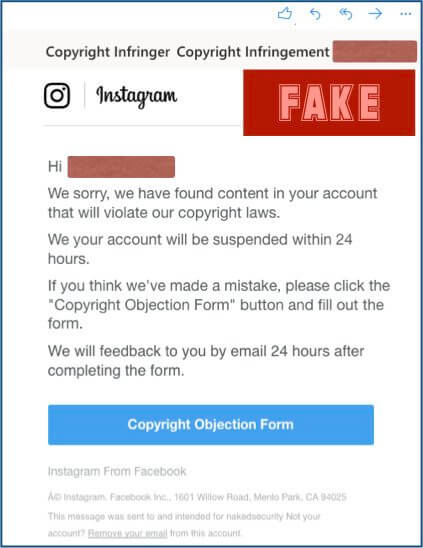
A new phishing scam is targeting most of the Instagram users by accusing them of Copyright Infringement and obtaining their credentials. It baits the users into giving away their login details using bogus copyright infringement alerts. The attack begins with a phishing email distributed as a part of this fake campaign that claims a user's account will be suspended in 24 hours for violating Instagram's Copyright Law. It triggers the users with a copyright notice and the users who wish to refute the claim can do so by clicking on the 'Copyright Objection Form' button embedded in the same email.

FAKE ALERTS OF COPYRIGHT INFRINGEMENT

Instagram news

In the present era, nobody wants to get locked out of their accounts on the social media platforms, even if it's for a while. Consequently, the temptation to click on the email or its buttons is very high. The phishing messages appear similar to the official emails on Instagram. However, the emails have numerous grammatical errors, which are a hint to the users that something is amiss. Clicking the button of 'Copyright Objection Form' redirects the user to a fake Instagram page. Moreover, the page's URL doesn't end in '.com' but in '.cf' which adds to the illusion that the domain is an Instagram one on the mobile web browser.
The page seeks to appear legitimate and official by using an SSL certificate, represented by 'HTTPS' in the address bar and green padlocks. If the users click through, they would then be asked to give their email id, date of birth, and Instagram password. After obtaining all the private information of the users, the phishing page redirects them to the official Instagram login page for maintaining the illusion that the copyright objection form was authentic. If the Instagram users fall for this trick, the hackers can take control of their accounts undisturbed.

WHAT CAN THE USERS DO?

It is a matter of fact that yes; some of the Instagram users are bound to fall for such kind of scams. If you have got either your account hacked or credentials stolen but can still access the account, you first need to check whether your correct email id and mobile number are still associated with your account or not. For doing so, click on 'Edit Profile' option and scroll down to view the current mobile number and email id. If the attackers have changed the info, try to enter your details. After this, you should change your password as well, which would automatically log off all devices currently logged into your account, and give you the full control of your account. In case you lose complete access to your account, you can report the incident to Instagram's security and wait for Instagram to confirm your identity with either your mobile number or email id using which you had signed up.
Such scams are yet another reminder for all the users to read the emails carefully and further inspect the URLs of all the links. They should also enable two-factor

Ref- https://www.kashishworld.com/blog/beware-of-instagrams-new-copyright-phishing-scam/

Tuesday, October 1, 2019

Fashion Industry and Intellectual Property Infringement

In today's fast-paced society, the fashion industry is continually evolving. While being a part of almost everyone's daily life, fashion is something to which each one of us can relate. Be it in the form of shoes, or the apparel which we wear, the fashion industry is indeed the most widely-recognized and profit-making industry in the world and yet is also the most vulnerable. Although getting inspired by something or someone is accepted in the modern world; however, at times, this inspiration comes as more of direct imitation than an innovative extension of the original idea. It is a matter of fact that yes; Intellectual Property (IP) Laws act as watchdogs for the creative ideas; quite often it becomes arduous to keep an eye on every development or creation that takes place across the globe every minute.

Intellectual Property Infringement issues not only result when small-time retail shops breach the Intellectual Property Rights (IPRs) of big brands; but even the vice-versa for the same holds to quite an extent. Furthermore, the vulnerability of this industry emerges from the lack of Intellectual Property Protection given to the fashion labels and brands as well. As the innovative ideas and creative fields of the fashion industry stand on the pillars of sincere efforts and flawless skills of the creators, they often sue others for the infringement of their designs.


WHAT CAN BE DONE?

Although Trademark Protection can protect a fashion brand and its entity, it often becomes ineffective against copycat or lookalike products. As the biggest threat to the fashion industry, these copycat products come to the consumer market very quickly after the launch of a new clothing line. Why trademark protection lags in such cases is because the lookalike products don't use the name of the original brand names. Therefore, the protection of IP in the fashion industry requires an agile approach with a strategy flexible enough to keep in pace with the ever-evolving nature of fashion trends. Besides, the fashion designers and creators must tailor the IP strategy to fit their particular niche within the fashion business.

In the creative fashion industry, Copyright Protection can extend to the designs (including fabric prints, lace patterns, and jacquard weave) and products, which are regularly changing and fast-moving. When a lookalike product copies the entire look of the original brand, without using its name, and it doesn't seem feasible to seek or claim Industrial Design Protection, copyrights offer an additional avenue of claim, only when the original fashion design is a work of artistic craftsmanship. In many jurisdictions, protection for copyrights may be broader because of the absence of any specific categories of copyrighted works. However, it is still necessary to show that the works are distinctive and original as what constitutes the term 'original' varies from one jurisdiction to another.

Nowadays, well-established regimes in various jurisdictions grant exclusive powers to the Customs authorities to seize and destroy trademark infringing and counterfeit products. Generally, Customs authorities are more accustomed to identifying trademark-infringing products than those that may infringe copyrights. Therefore, more intensive customs training and detailed product information can help them to spot similarities among designs.

Industrial design protection usually provides a quicker and cheaper way of obtaining a registered IP and protects the features that are prominent in fashion labels and brands, including decoration and design. As an additional route for enforcement, industrial designs protect the appearance of the entire product or a part of it resulting from the features of colors, shapes, textures, contours, lines, or its ornamentation. Industrial Design Registration across the globe has a global novelty requirement, and it isn't cost-effective to seek protection for all novel designs just by predicting the likelihood of their success. The motive must be to protect the novel designs and features of the products that will spark new trends before the infringers begin to violate them.

BOTTOM LINE
For creating new and innovative designs, the fashion industry invests an enormous amount every season. Due to the growing trends of counterfeit items, fashion designers usually fail to protect their IP. Infringers have become more sophisticated in their action than ever before, and subtle lookalike products are present in almost every consumer market. Entirely removing the issue of counterfeiting and copying of designs seems to be next to impossible. However, the creators and brand owners must stay alert and keep themselves aware of the applicable IP laws to safeguard their unique creations and designs.

Tuesday, September 24, 2019

Copyright Infringement And Ways Of Avoiding It

Intellectual works such as written stories, poems, recorded songs, artworks, and photographs are just some of the original creations that can obtain Copyright Protection. It implies that the authors, creators, or artists or these original works own the exclusive rights to sell, distribute, derive, or modify their material. Without the owner's expressed permission, it is not legal for anyone to use the copyrighted work. Otherwise, the owner can sue you for violating the Copyright Law, and you may be held liable for Copyright Infringement.


COPYRIGHT INFRINGEMENT

Copyright Infringement is just another term for theft of ideas and piracy. To be specific, it refers to the act of stealing someone's original creations and violating his Intellectual Property (IP). It is indeed an illegal offense, especially when the person who has copied the idea, recoups all the benefits on behalf of the original creator.

EXAMPLES OF COPYRIGHT INFRINGEMENT
  1. A classic example of copyright infringement involves the use of music in your videos. If you haven't obtained the legal consent to use a song or audio as the background music in your creative works, presentations, or movies, you could be held liable for copyright infringement. Nowadays, various video-sharing social media platforms like Facebook and YouTube actively mute songs and music for preventing Copyright Violation.
  2. Quite often, many creators provide the option of downloading their original works for a fee. However, downloading a TV show, music, software, or movie, that is not owned by the creator leads to copyright violation. Such non-authorized websites automatically prompt you to share the same material with others as well, which results in you redistributing the copyrighted material intentionally or unintentionally and without the owner's permission or knowledge.Another typical example of copyright infringement involves using a creator's artwork, photograph, or graphics in your website's posters, banners, or brochures, without seeking their permission. You can't use such material in your marketing campaigns as well until and unless you either buy the photograph or artwork or pay the creator a certain fee. Furthermore, purchasing or paying for someone's artwork doesn't permit you to use the same for merchandising without any explicit consent.
  3. Even if it's a derivative or inspired work, you can't copy it and claim it as your own; it is referred to as 'plagiarism' in the music or publishing industry.
  4. Although it is reasonably acceptable to record a TV show at home for watching it later; however, passing the recorded material to others, producing a bunch of its copies to sell and gain profit, or broadcasting and posting the video online becomes a case of copyright infringement.

HOW TO AVOID COPYRIGHT INFRINGEMENT

In today's digitally transformed world, it has become ever-easier to reproduce or distribute the original works of the creators. However, the risks and consequences associated with copyright infringement won't be worth the trouble to your finances, peace of mind, reputation, and time. Few tips to avoid copyright infringement are as follows:

Always Assume There's Copyright

Assuming that a created work has copyright protection is the safest option. Even if you don't come across any official statement regarding the public use of that particular material, there's still a probability that someone already owns its Intellectual Property Rights (IPRs). Therefore, it is better to get written consent from the copyright owner whose work you wish to use. Put in efforts to contact the owner for making or negotiating a deal.

Research Well Before Using the IP of Others

Some creators share their works for a price, while others grant permission, only if there is proper attribution. In case there are no attribution conditions or specific fee involved, you must go through the clause of Terms and Conditions on the official website of the copyright owner. Besides, contacting the owner for his expressed consent is usually the best possible way of preventing infringement.

Understand the term 'Fair Use'

Making yourself aware of the rights under 'Fair Use' can help you in taking advantage of the original works for non-commercial endeavors. However, it is imperative to know about a few factors that may affect your usage and its value in the market. Consulting a legal expert on copyright laws can clear your doubts as well.

Pay Someone for the Original Works or Create your Own

If you have the right creative and artistic skills, you can also come up with your original content, rather than copying someone else's work. On the other hand, if you have adequate financial resources, then you can pay other people to be the creator yourself.

Source Free-to-Use Materials under the Public Domain

Nowadays, there are many sources for free-to-use materials under the Public Domain. You can search for the works with 'Creative Commons' (CC) license (enabling the free distribution of the otherwise copyrighted work), which can be commercially viable.

Ref: Copyright Infringement And Ways Of Avoiding It ✅ https://t.co/gs6jVho96A#trademarkregistration #trademark #patentregistration #industrialdesign #copyright #patent #intellectualProperty#IP #kipg #domainname pic.twitter.com/yNbwPwHYRk

Tuesday, September 10, 2019

Protecting Software Innovations – Copyrights Or Patents?

Computer programs or software refer to the instructions executed by a computer. It takes a lot of time, skill, labor, and hard work to develop computer software, which is in the form of source codes and object codes. In today's highly competitive business environment, software innovations have an enormous market value and hence can be copied and used by unauthorized people. Therefore, it is highly advisable to protect the software either under Copyright Law or Patent Law, which at times can be a tough decision to make.


PROTECTION OF SOFTWARE INNOVATIONS UNDER COPYRIGHTS AND PATENTS

Patents or copyrights are the legal forms of Intellectual Property Rights (IPR), which can protect the owner's software source code, invention, or idea. It often becomes necessary for every software developer or designer to choose between a patent and copyright. For making a choice, the developer has to think about what he is protecting. The question is, whether the developer is protecting the code or the idea and process of the software. Obtaining the registration of patents and copyrights are two very different processes and might also change what the owners want to do with their software.
Under the law, both copyrights and patents protect software from theft and infringement. However, each one protects a different part of the software. For instance, patents protect the idea while copyrights protect the written code. Additionally, copyrights don't protect the idea behind the source or object code. To be specific, copyrights don't protect ideas, processes, procedures, and systems, methods of operation, concepts, discoveries, or principles. Software patents, on the other hand, are utility patents (and not design patents), that protect a process, machine, an article of manufacture, a composition of matter, or improvement on an already existing utility.

ADVANTAGES OF SOFTWARE PATENTS OVER COPYRIGHTS

Patents granted for software inventions prevent unauthorized users from utilizing a specific algorithm or creating new software programs (which perform the patent-protected functions), without any explicit permission. On the other hand, copyrights protect only the expression of the idea, i.e., the source code and not the functionality. Therefore, it won't be wrong to say that patents offer a much broader range of protection.
Some of the significant contrasting features between these two forms of Intellectual Property Protection are listed below:
  1. Patents protect the functional aspect of a software invention, whereas copyrights protect only the idea and concept behind the software.
  2. Copyright Protection extends for the owner's or author's lifetime plus an additional period of 60 years, whereas patents last for 20 years.
  3. Software patents are difficult to get, whereas Copyright Registration takes only a few months.
CONCLUSION
Whether any software program or piece of code involves an inventive aspect or not, it must seek protection under Copyright Law. However, the dilemma to obtain Patent Protection arises when there is an invention in a software product or process. In such circumstances, the owner should explore the option of protecting the software invention with a patent as they offer much broader and stronger protection than copyrights.

Ref: https://www.kashishworld.com/blog/protecting-software-innovations-copyrights-or-patents/

Understanding the Concept of Destination Branding through Trademark Protection

 The hospitality industry of India has undoubtedly become an exceedingly crucial service provider across the nation. Due to the increase in ...